Bonnet or Hood? The English Words for Every Part of a Car
Nowhere do American and British English part ways as dramatically as in a car. An American driver lifts the hood; a British driver lifts the bonnet, and it is the exact same sheet of metal. Learn the parts of a car and you very nearly learn two languages at once. So let's walk around one, front to back, and then climb inside and sit down.
The front of the car
At the very front, the large panel that lifts up to reveal the engine is the hood (UK: bonnet). Below it, the low bar that protects the car in a small knock is the bumper. On each side sit the headlights, which light up the road at night. Above the hood, the big front window is the windshield (UK: windscreen), kept clear in the rain by the rubber-bladed wipers that sweep back and forth across it. Fixed to each front door is a side mirror (UK: wing mirror), and low at the front and back is the license plate (UK: number plate), the panel of letters and numbers that identifies the car.
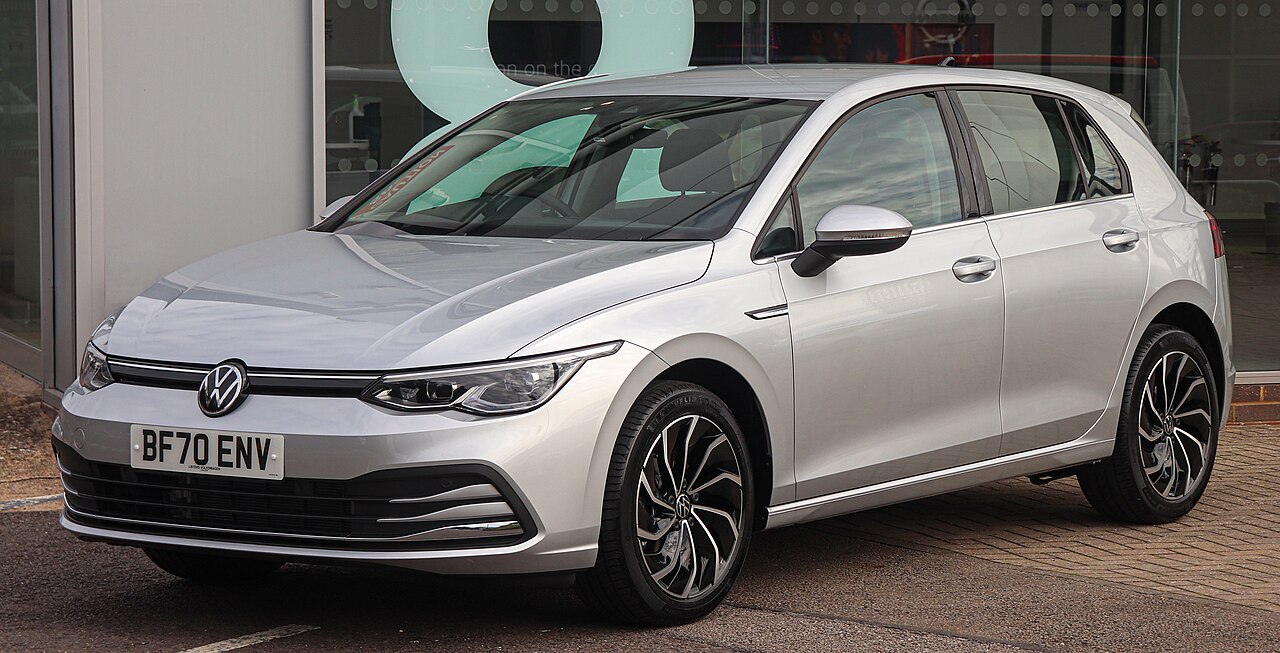
Photo: Vauxford / CC BY-SA 4.0, via Wikimedia Commons.
The back of the car
Now walk around to the back. The big door that lifts up to load your groceries and suitcases is the trunk (UK: boot). The red lamps are the brake lights, and the amber ones that flash to show which way you are about to turn are the turn signals (UK: indicators). And on all four corners, the thick rubber ring around each wheel is the tire (UK: tyre), the only part of the whole car that actually touches the road.
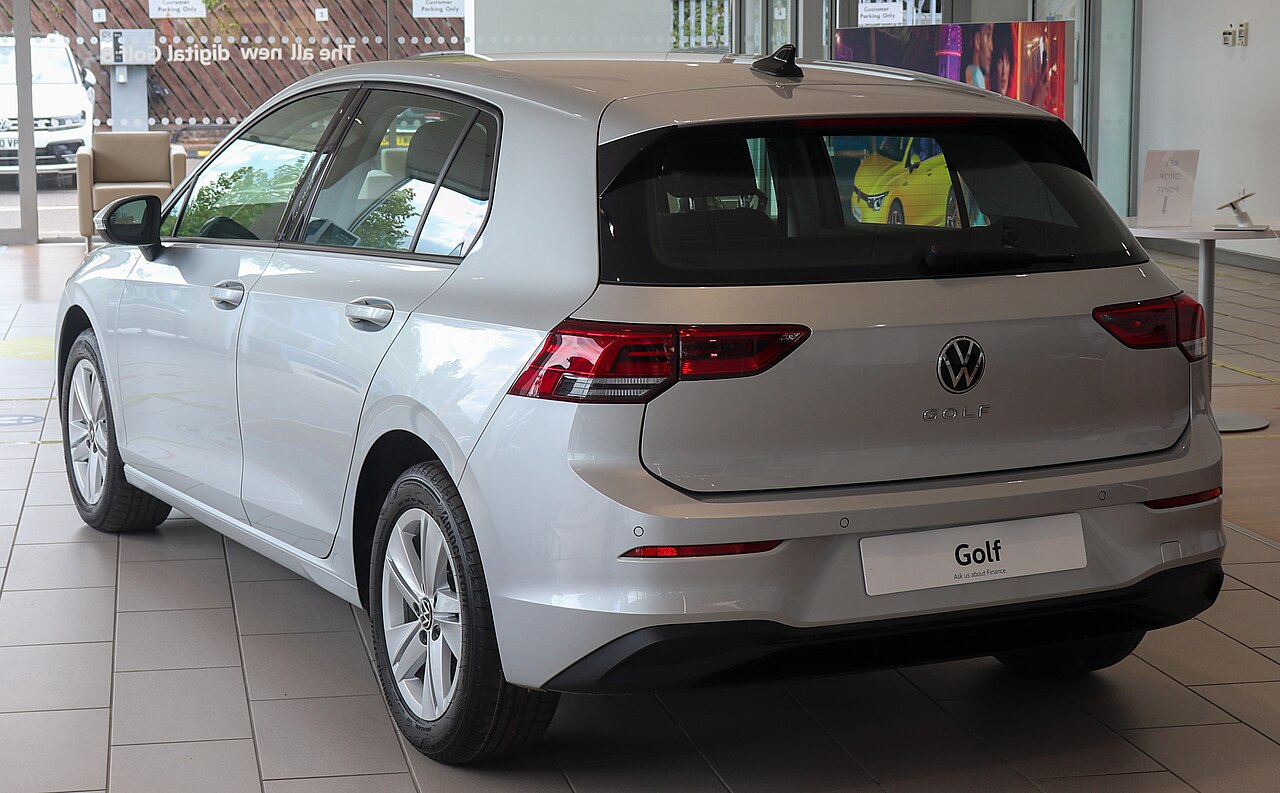
Photo: Vauxford / CC BY-SA 4.0, via Wikimedia Commons.
Behind the wheel
Open the door and sit in the driver's seat. Right in front of you is the steering wheel, which you turn to steer the car left and right. Behind it, the panel of dials, lights and screens is the dashboard; the round dial that shows how fast you are going is the speedometer.
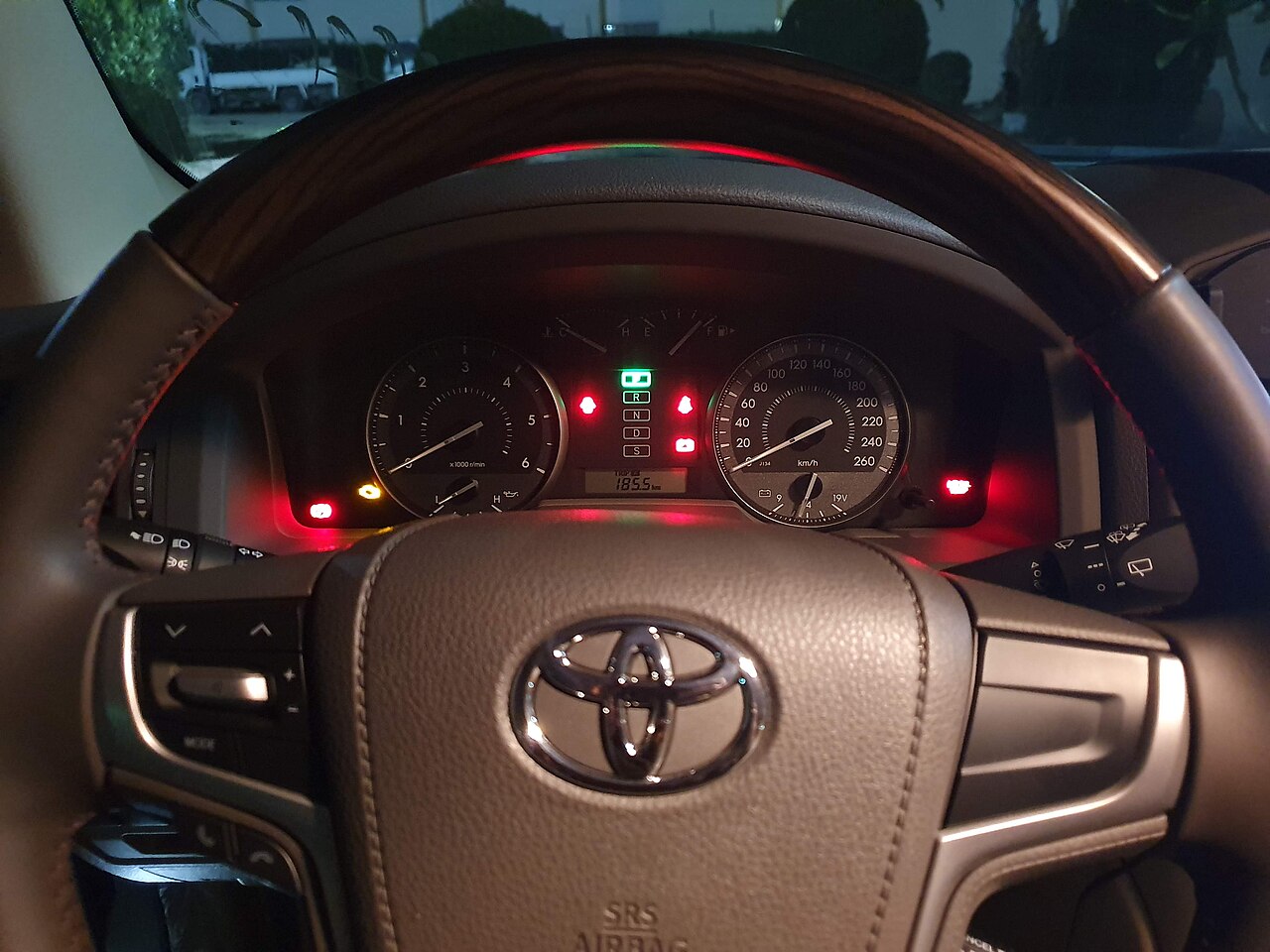
Photo: Kskhh / CC BY-SA 4.0, via Wikimedia Commons.
The controls
Down between the front seats sits the gearshift (UK: gearstick), which you move to change gear, and beside it the parking brake (UK: handbrake), which you pull up to stop the car rolling away when it is parked. At your feet are the pedals: the gas pedal (UK: accelerator) to speed up, and, in a manual car, the clutch that you press down each time you change gear. Before you move an inch, you pull the seatbelt across your chest, and any odds and ends go in the glove compartment (UK: glovebox) in front of the passenger.
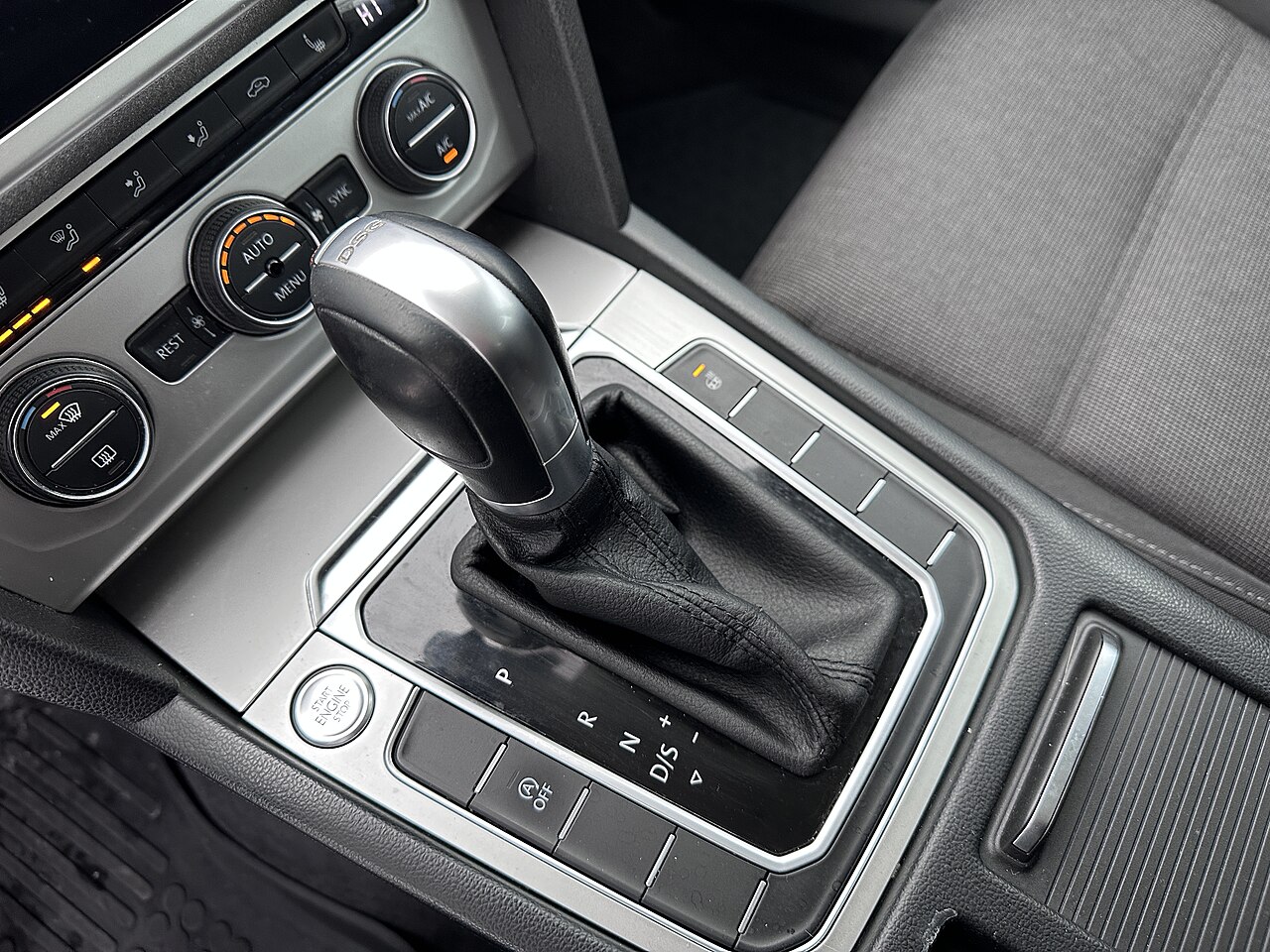
Photo: Acgskup / CC BY 4.0, via Wikimedia Commons.
The American-British cheat sheet
Because the car is where the two Englishes really split apart, here is a quick list worth keeping:
- hood (UK: bonnet)
- trunk (UK: boot)
- windshield (UK: windscreen)
- side mirror (UK: wing mirror)
- license plate (UK: number plate)
- tire (UK: tyre)
- turn signal (UK: indicator)
- gearshift (UK: gearstick)
- parking brake (UK: handbrake)
- gas pedal (UK: accelerator)
Put the words into play
A car is one of the most useful things in the world to be able to talk about, whether you are at the mechanic, renting one on vacation, or just following directions. Open the Car Parts collection above, practice each word in a simple sentence ("Open the trunk", "Check your side mirror", "Put your seatbelt on"), and you will be ready no matter which side of the Atlantic your mechanic learned to speak.