What's on a Football Pitch? The English Word for Every Part
If you watch soccer in English (in most of the world the game is called football), the commentary moves fast. "He's brought it down in the box." "That ball's gone out past the touchline." "The keeper has to stay on his line." You understand the game perfectly. The trouble is that the words fly past before you can catch them.
Here is the good news: you already see every one of these things on the screen, every single match. You just may not know their English names yet. So let's take a slow walk around a soccer field and put a name to everything on it. Learn this one set of words, and match commentary stops being a blur.
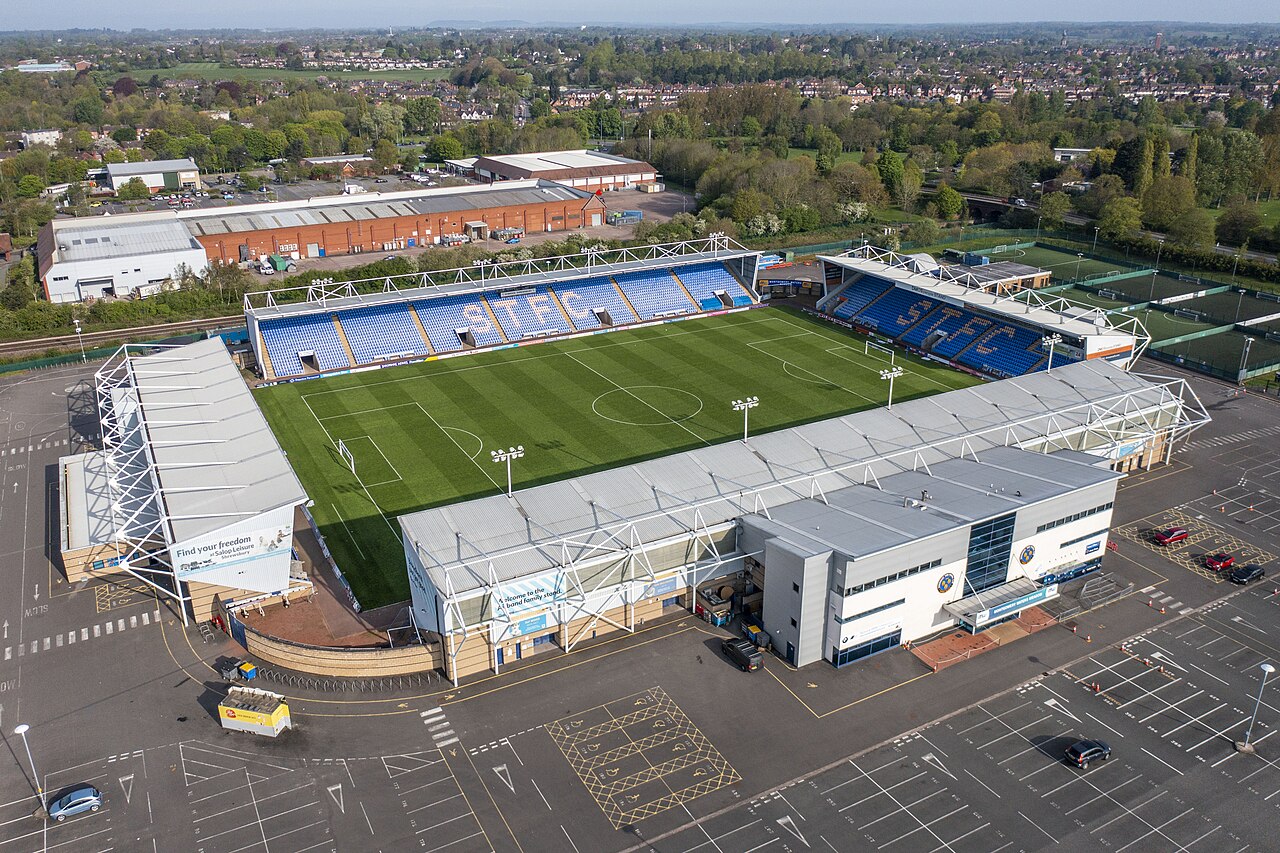
Photo: TCExplorer / CC BY-SA 2.0, via Wikimedia Commons.
The playing surface
The whole playing area is called the field (UK: pitch). You will hear both words, depending on who is speaking.
The surface itself is the turf. The word covers both real grass and the artificial grass used at many modern stadiums. When a commentator says the turf is "heavy" or "slick", they are telling you the grass is wet and the ball will skid and roll differently.
The goal
At each end of the field stands the goal. It is made of three parts that are worth naming separately, because commentators talk about them constantly.
The two upright bars are the goalposts, often shortened to "the posts". The bar that joins them across the top is the crossbar. Together, the posts and the crossbar are nicknamed "the woodwork", which is why you hear "that's off the woodwork!" when a shot hits the frame and bounces away.
Behind the frame hangs the net. The net does not stop the ball. It simply catches it, so that everyone can see clearly that a goal has been scored.
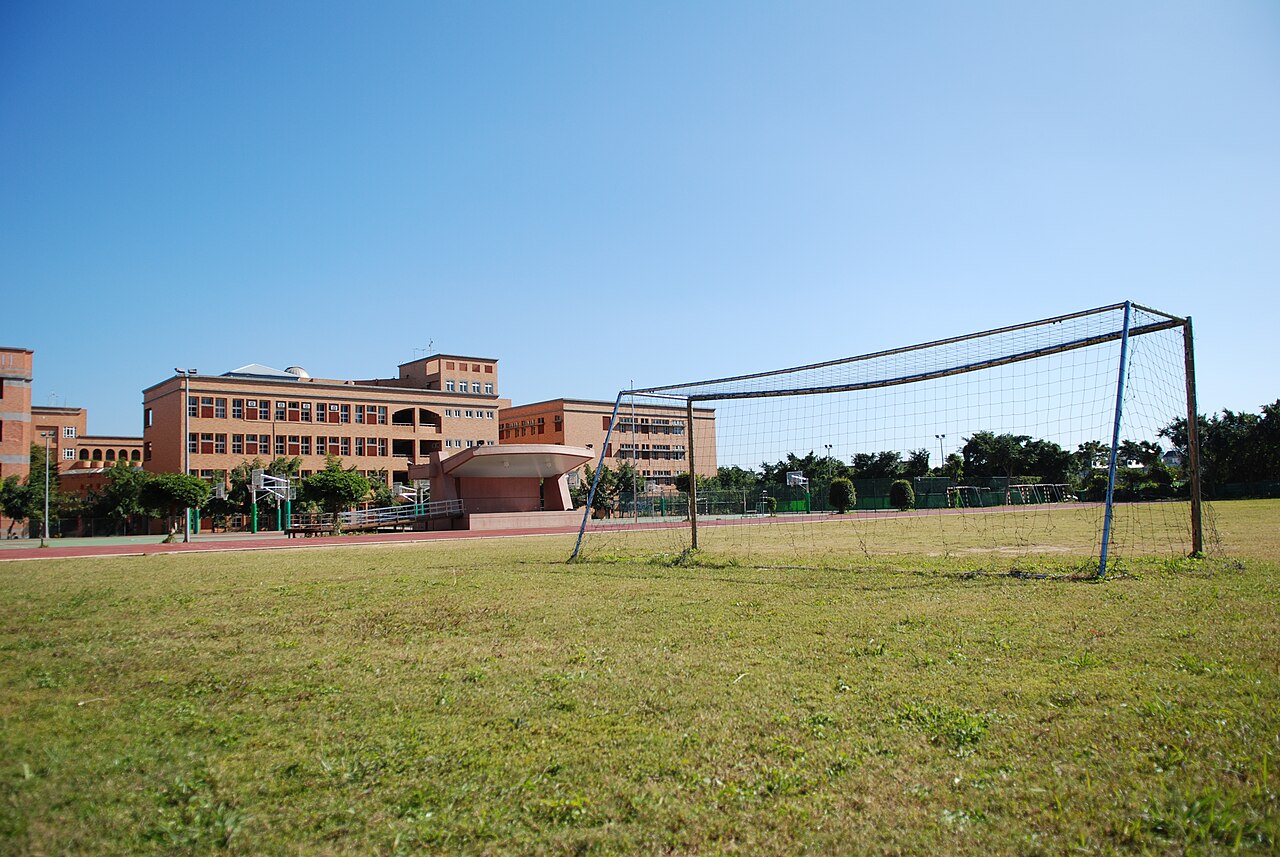
Photo: Qwe980777 / CC BY-SA 3.0, via Wikimedia Commons.
The lines on the ground
Those white lines are not decoration. Each one has a name and a job, and once you know them, the rules of the game suddenly make sense.
- The line that cuts the field into two halves is the halfway line. The ring painted around its center is the center circle, and that is where each half kicks off.
- The large rectangle in front of each goal is the penalty area. Almost everyone just calls it "the box". A foul by the defending team inside this area gives the other team a penalty.
- The small white mark inside the box, twelve yards from the goal, is the penalty spot. That is exactly where the ball is placed for a penalty kick.
- The line that runs along each end of the field, between the two goalposts, is the goal line. A goal counts only when the whole ball has crossed it.
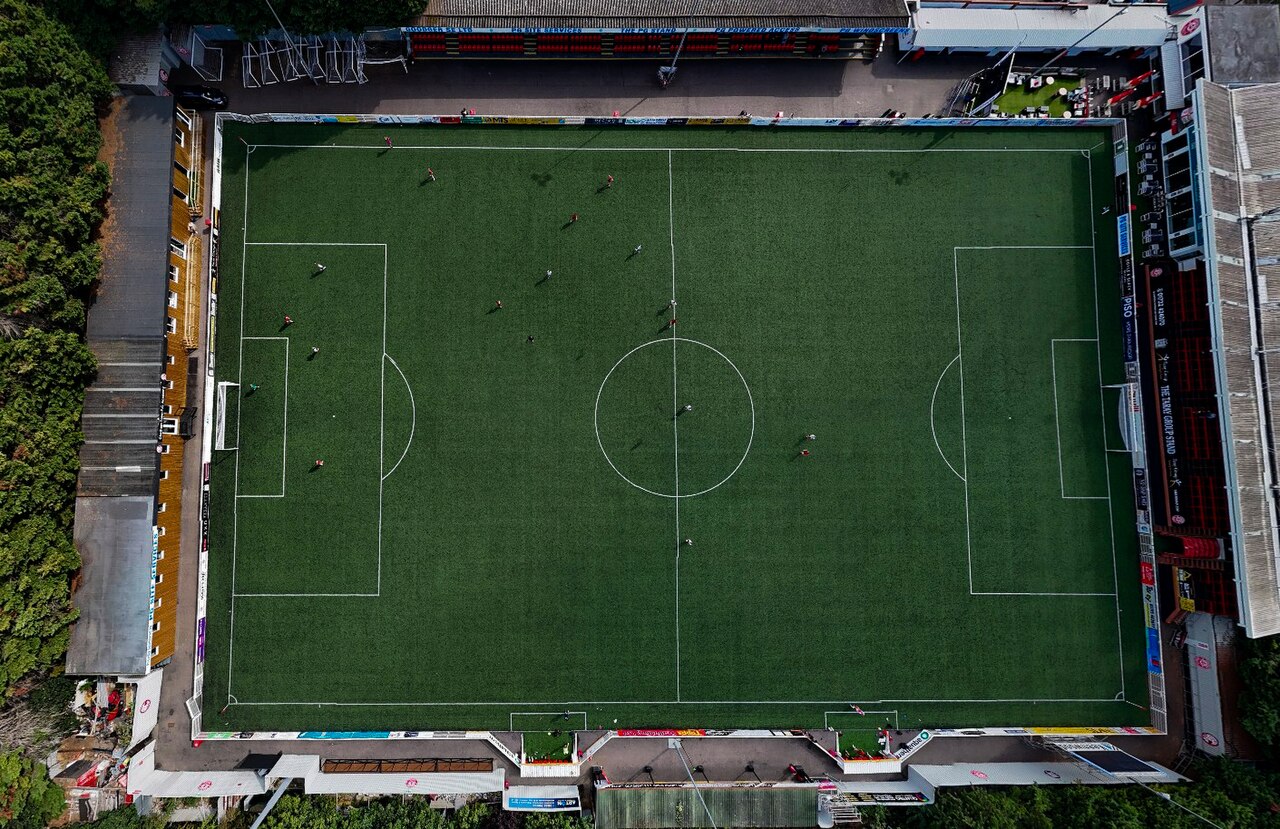
Photo: Stephen Kennard / CC BY-SA 3.0, via Wikimedia Commons.
The edges of the field
A field has four edges, and crossing each one means something different.
The two long sides are the touchlines (many Americans call them the sidelines). When the ball fully crosses a touchline, it has gone out of play, and the game stops for a throw-in. The two short ends are the goal lines we just met.
At each of the four corners stands a corner flag. It marks the exact spot where a corner kick is taken, and it also helps the referee see whether the ball left the field at the side or at the end.
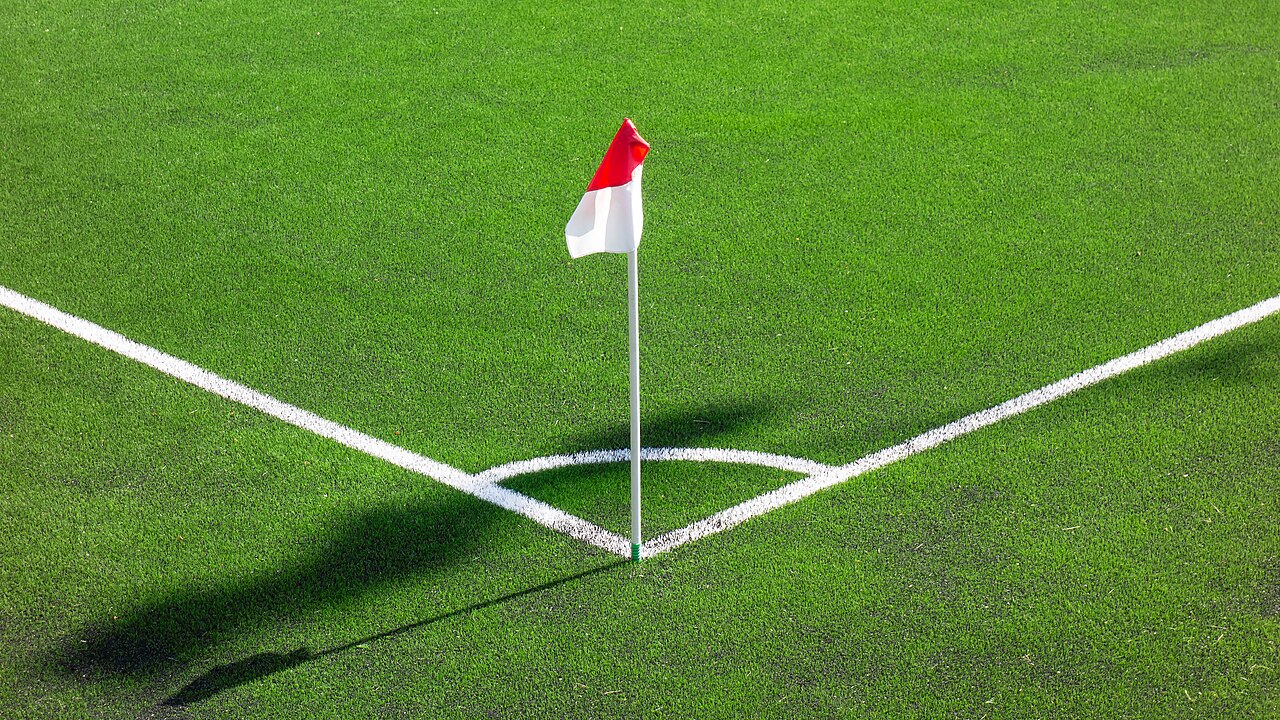
Photo: W.carter / CC0, via Wikimedia Commons.
Around the field
Not everything important is on the grass. Just off the side of the field sits the dugout, the low, covered bench where the coach and the substitutes sit and watch. The marked zone around it, where the coach is allowed to stand and shout instructions, is called the technical area.
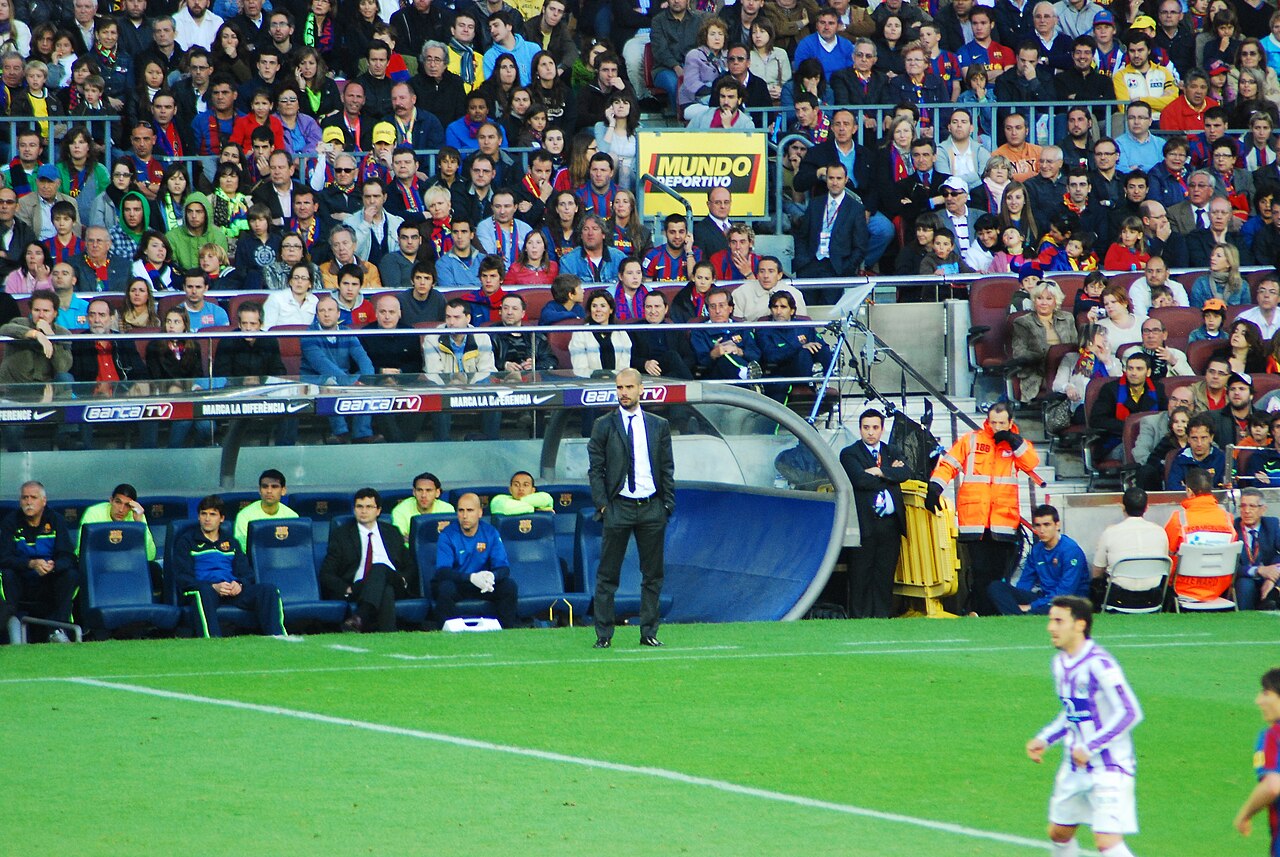
Photo: Oemar / CC BY 2.0, via Wikimedia Commons.
Rising up all around the field are the stands, the banks of seats where the crowd watches. In older stadiums you may also hear the word "terraces", the standing areas that were common before all-seater stadiums became the rule.
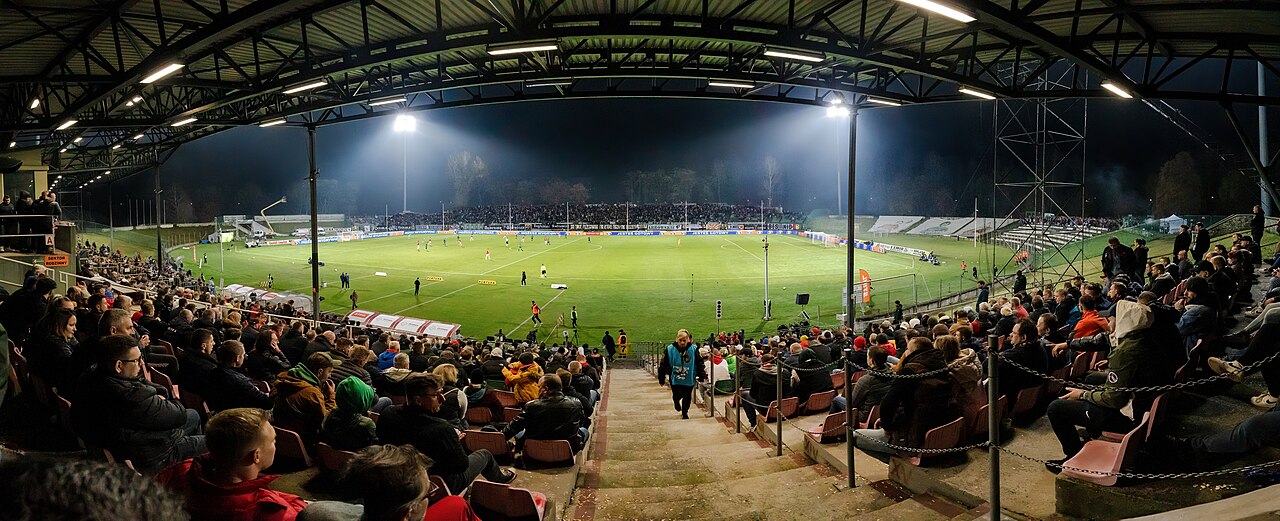
Photo: Krzysztof Popławski / CC BY 4.0, via Wikimedia Commons.
Learn the whole set together
These words belong together, so learn them together. Once you can name every part of a field, fast English commentary stops being noise and starts telling you a story you can follow. Open the Football Pitch collection above, practice each word in real sentences until it feels natural, and the next match you watch quietly becomes an English lesson you actually enjoy.