What's in a Kitchen? The English Words for Everyday Cooking Tools
You can pass an English exam and still stand in a kitchen unable to name the thing in your hand. Everyday objects, the ones you touch while making dinner, are some of the last words a learner picks up, because classrooms rarely teach them. Let's fix that. Here is a quick tour of an ordinary kitchen, naming the things you use every day.
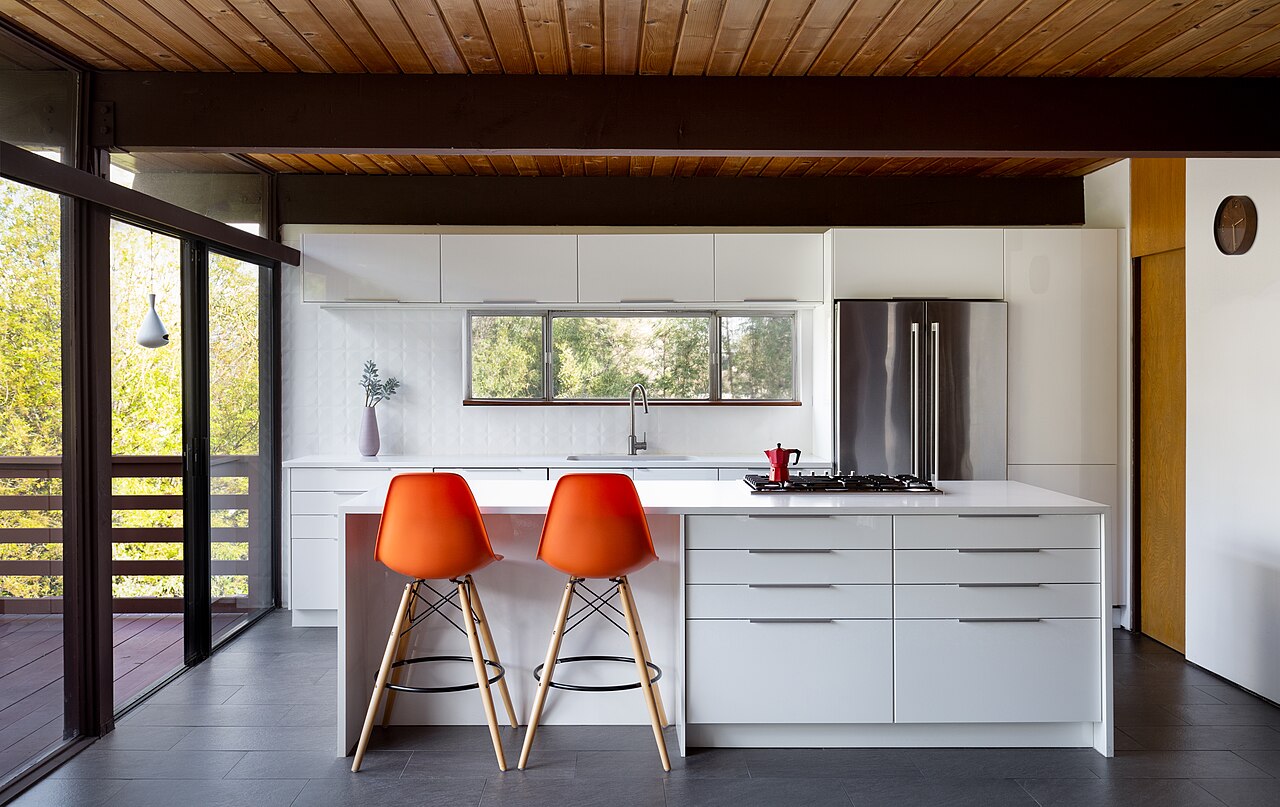
Photo: ChrisCaparro / CC BY-SA 4.0, via Wikimedia Commons.
The kitchen itself
Most of the work happens on the countertop, the flat surface that runs along the wall (in British English, the worktop). Built into it is the sink, where you wash the dishes, with a faucet above it for water (UK: tap).
You cook on the stovetop (UK: hob), the set of burners on top where the pans go, and inside the oven below, where you bake and roast. For storage, plates and cans go in a cabinet on the wall (UK: cupboard), while smaller things like spoons and forks live in a drawer that slides in and out.
Tools for preparing food
Before you cook, you prepare the food. You cut it on a cutting board (UK: chopping board), so you do not scratch the countertop. To take the skin off a potato or a carrot, you use a peeler. And to turn a block of cheese into thin shreds, you rub it against a grater.
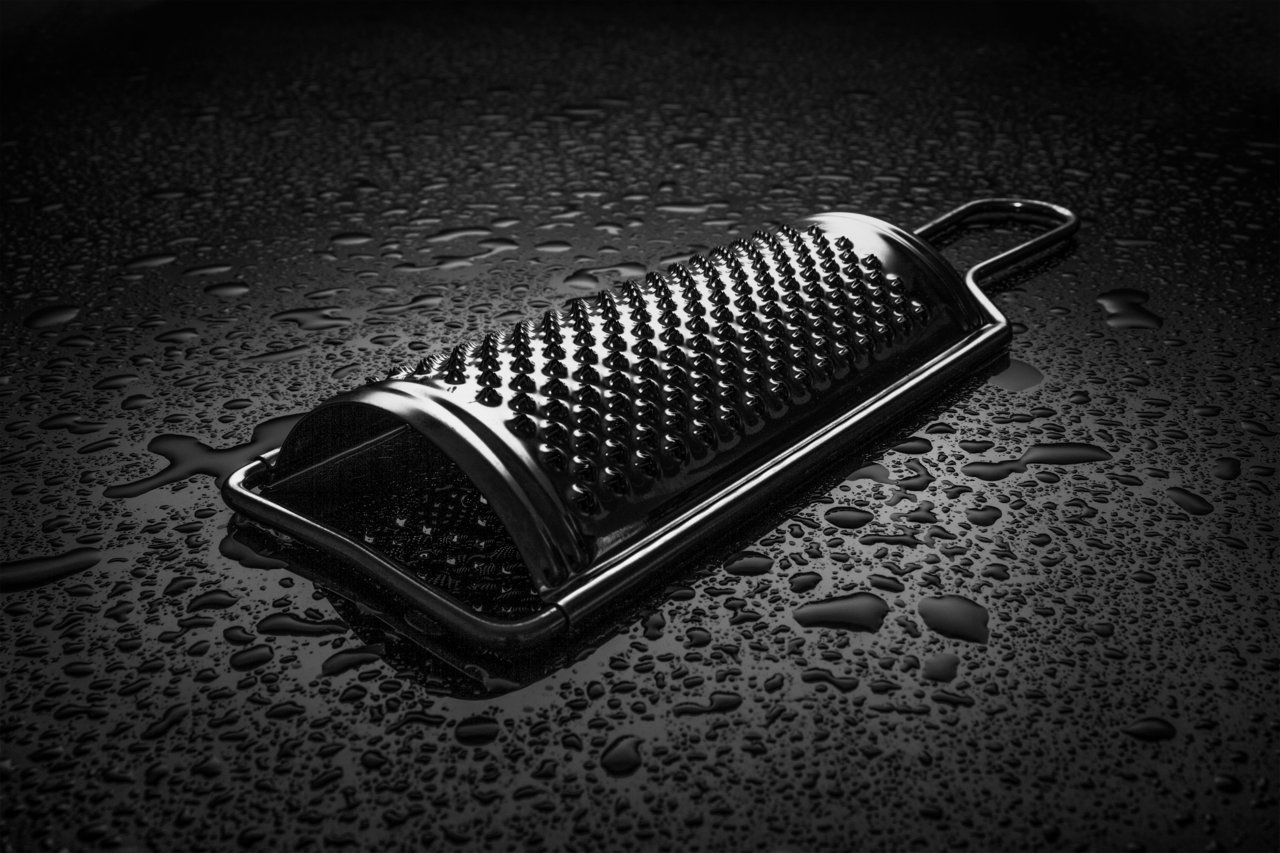
Photo: Robert AceKrampl / CC BY-SA 4.0, via Wikimedia Commons.
A tool for mixing
To beat eggs or stir a sauce until it is smooth, you use a whisk, a tool of thin wire loops that you move quickly around the bowl.
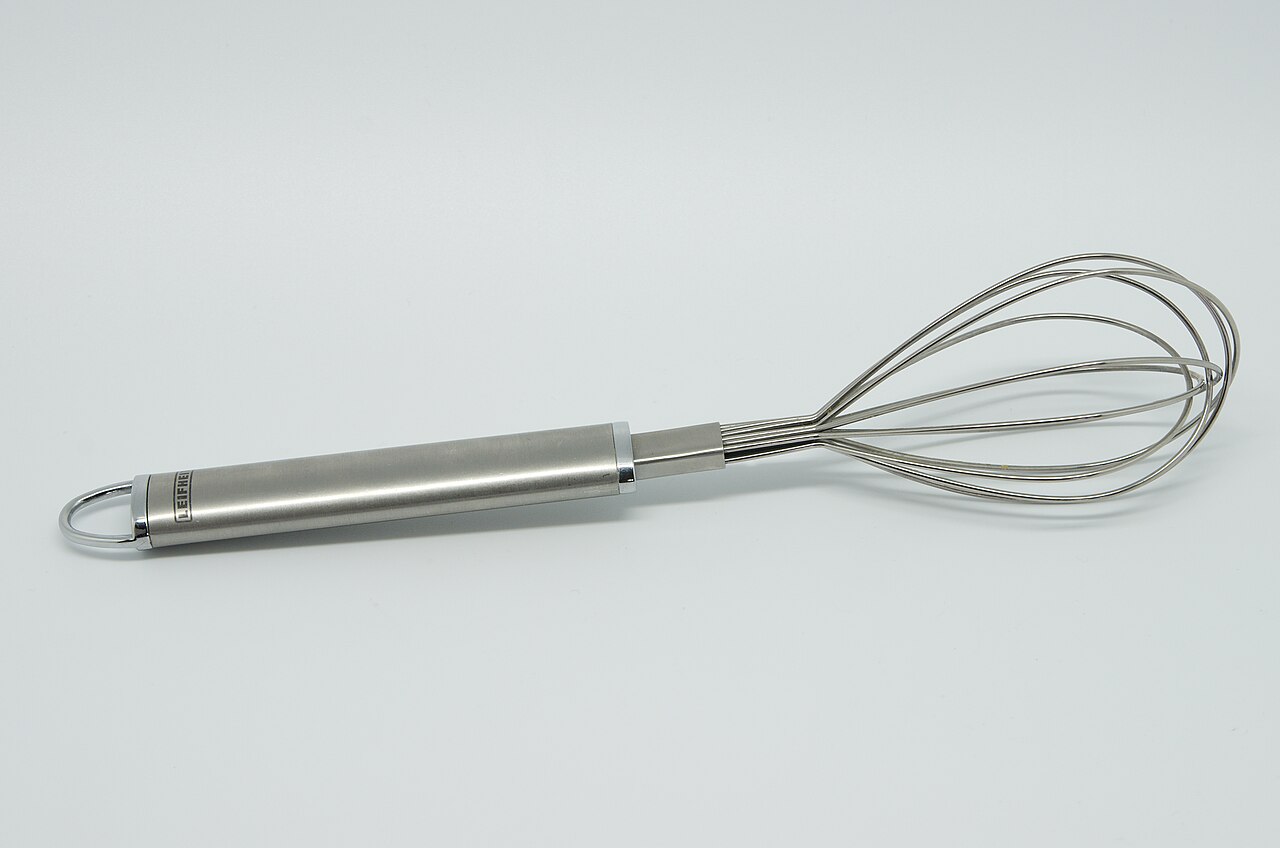
Photo: Clément Bucco-Lechat / CC BY-SA 3.0, via Wikimedia Commons.
Tools for draining and serving
When the pasta or the vegetables are cooked, you pour them into a colander, a bowl full of holes that lets the water run away but keeps the food. To serve soup, you use a ladle, a very deep spoon with a long handle.
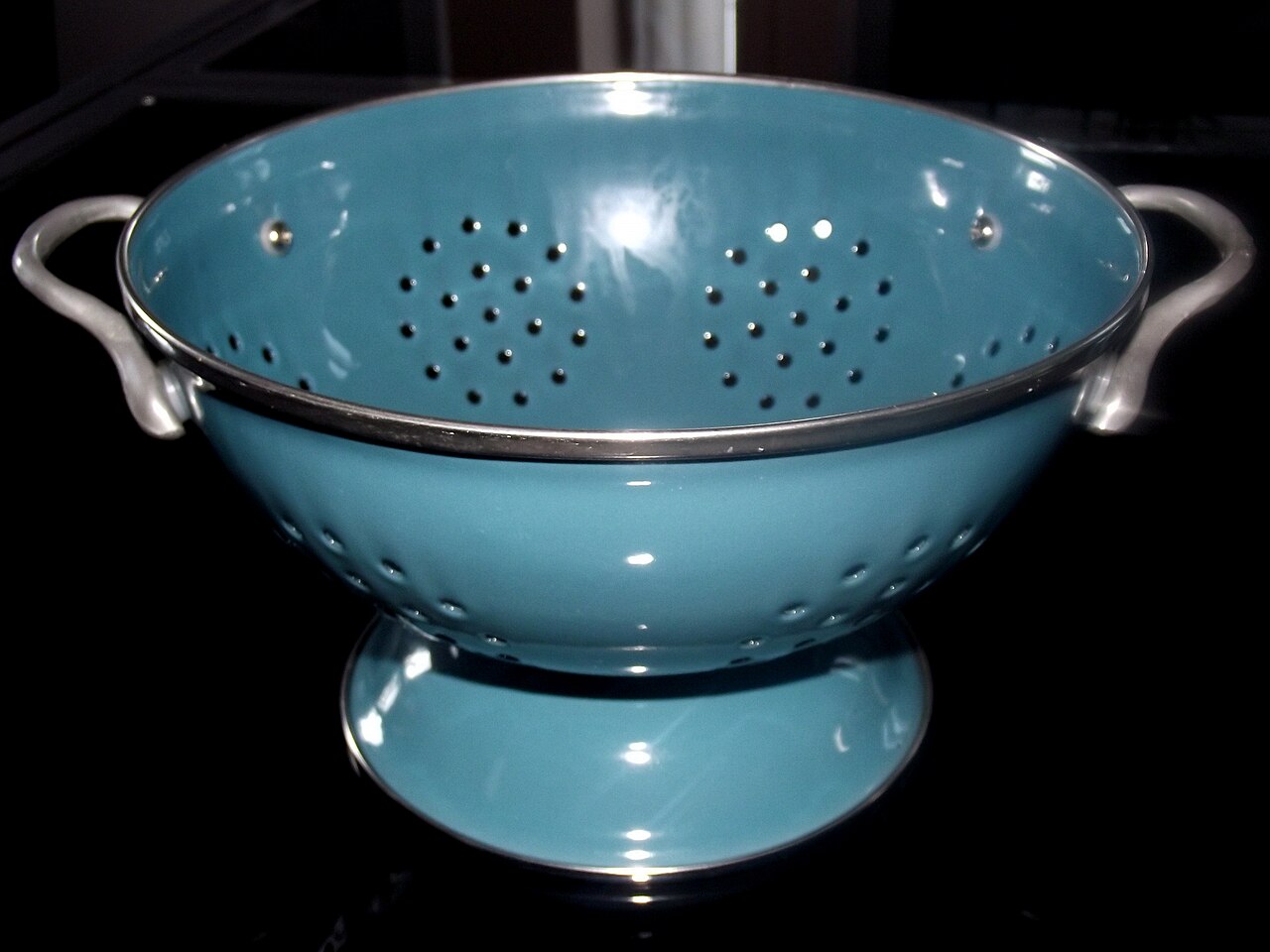
Photo: FAP / CC BY-SA 3.0, via Wikimedia Commons.
Boiling the water
And for that first cup of coffee or tea, you fill the kettle, switch it on, and wait for the water to boil.
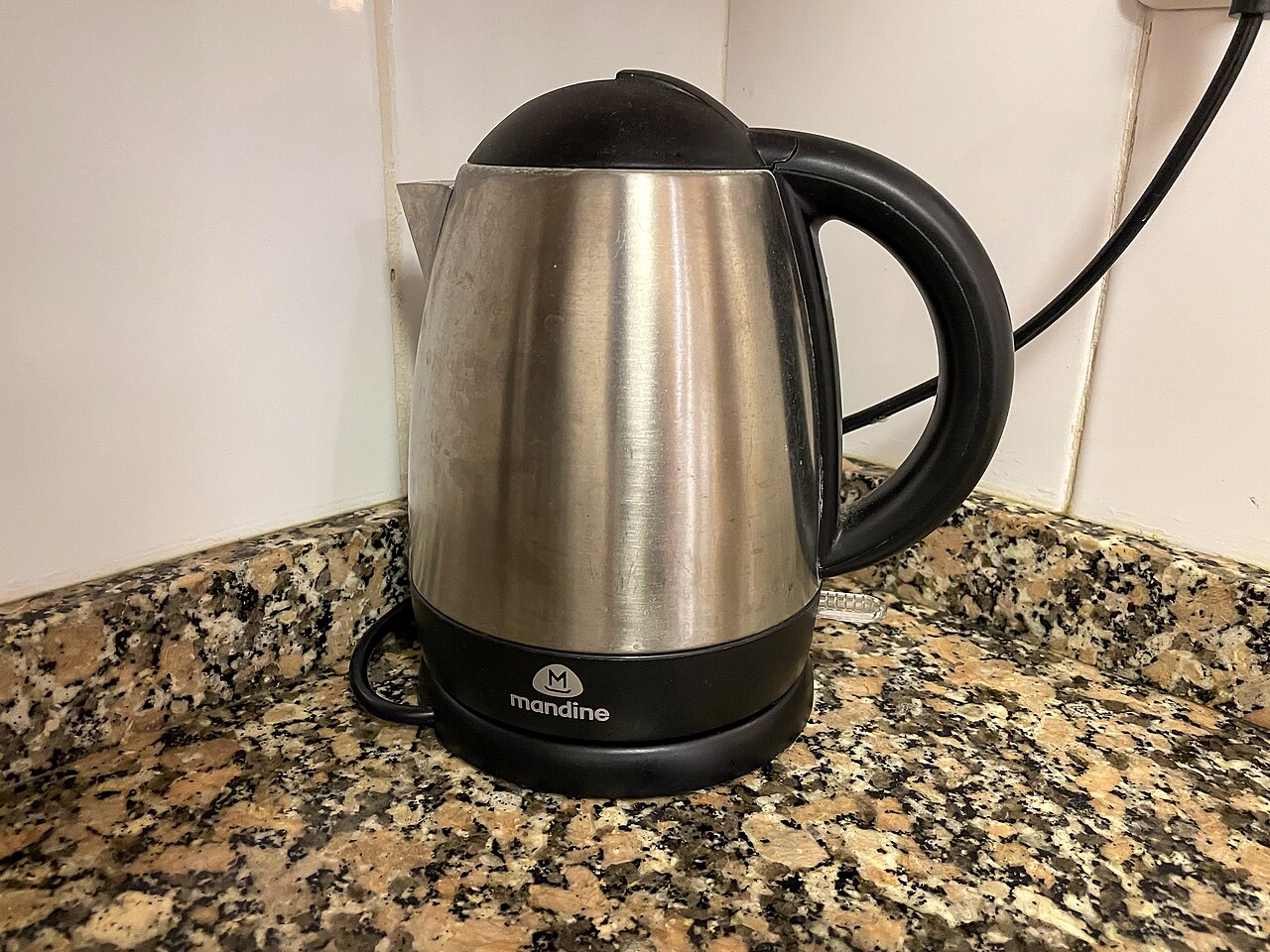
Photo: Photograph by Mike Peel (www.mikepeel.net). / CC BY-SA 4.0, via Wikimedia Commons.
Put the words into play
None of these words are difficult, but they are exactly the ones that quietly trip you up in a real kitchen, in a recipe, or in a store. Open The Kitchen collection above, practice each one in a simple sentence ("Pass me the colander", "The kettle has boiled"), and they will be ready the next time you reach for them.