At a Restaurant: The American Words for Eating Out, Explained
You have learned to buy food at the grocery store. Now let someone else cook it. Eating out in America comes with its own set of words, a couple of surprising customs, and one word that trips up almost every visitor. We will walk through a whole meal, from the front door to the tip, and explain each word as it comes up. Where American and British English disagree, and here they disagree a lot, you will see both.
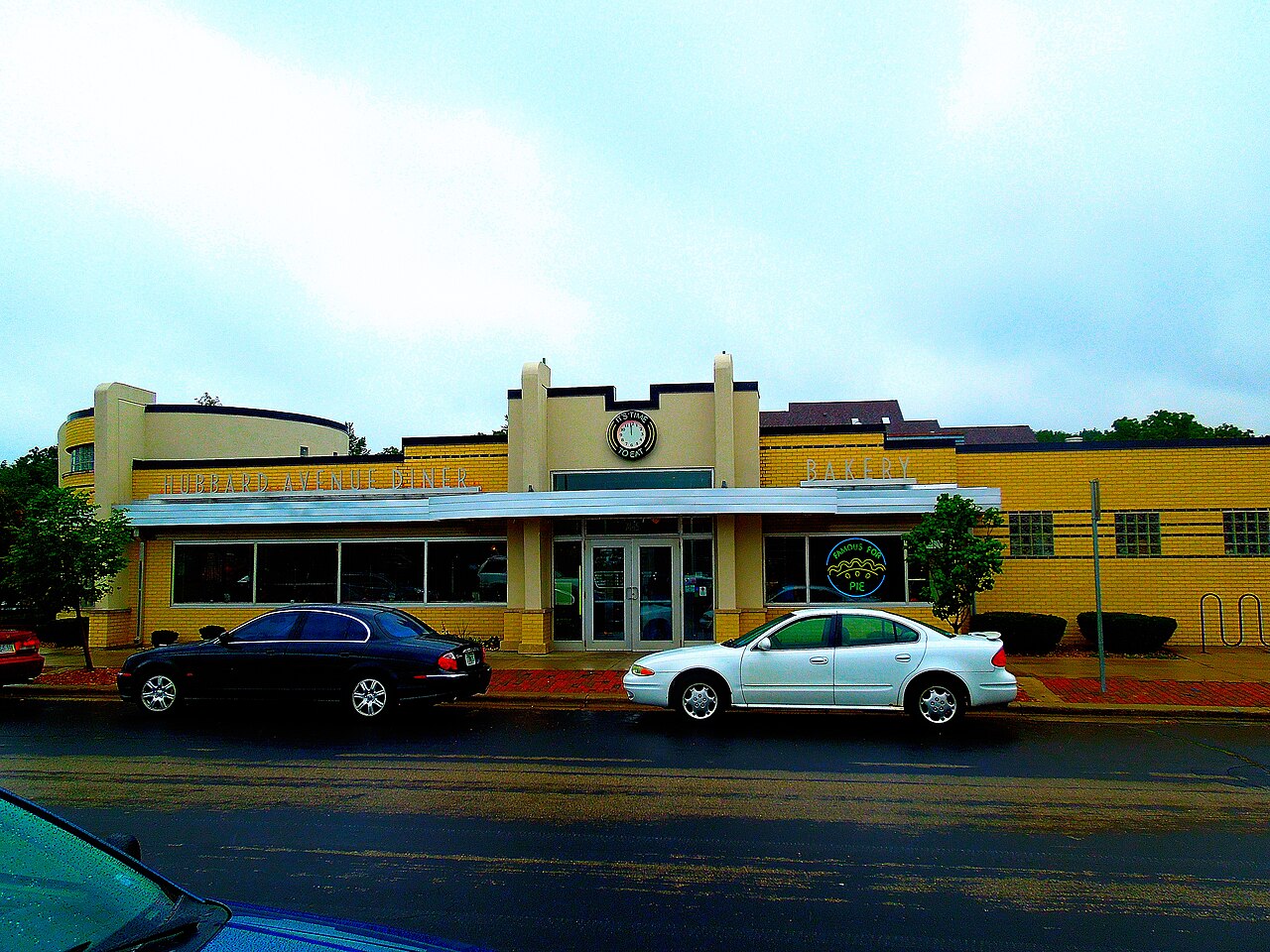
Photo: Corey Coyle / CC BY 3.0, via Wikimedia Commons.
Getting a table
For a popular place, you first make a reservation, calling ahead to book a table for a certain time and number of people. Americans say make a reservation; the British are more likely to book a table.
When you arrive, the person who greets you at the front and takes you to your table is the host (a woman is sometimes called the hostess). If the place is full, they may "put you on the waitlist." Then they lead you to your seat. It might be a normal table, or it might be a booth, the kind of seating with a long cushioned bench on each side and the table fixed in between. Booths are a classic feature of American restaurants, and many people ask for one on purpose: "Can we get a booth?"
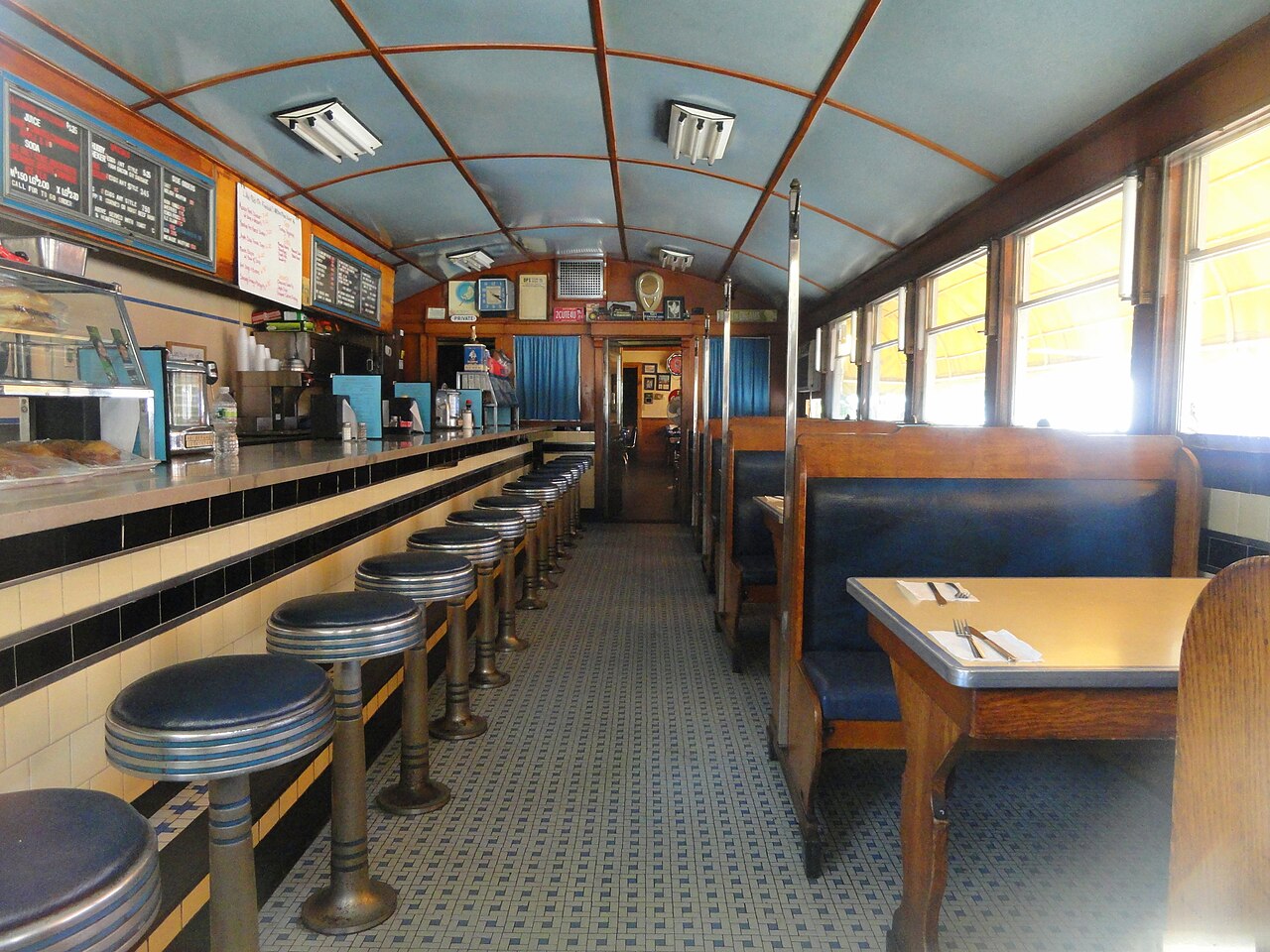
Photo: Daderot / CC0, via Wikimedia Commons.
Your server and the menu
Looking after your table is the server, the person who takes your order, brings your food, and checks that everything is all right. Server is the standard, gender-neutral American word; you will also hear waiter and waitress, and in Britain those two are still the usual terms.
The server hands you the menu, the list of everything you can order. Before you open it, they will often tell you the specials, the extra dishes the kitchen has made that day that are not printed on the menu. It pays to listen, because the specials are often the best thing available.
The courses (and the great entree trap)
Here is the word to be careful with. An American meal is built in courses. You might begin with an appetizer, a small first dish meant to be shared or to start you off, which the British call a starter.
Then comes the main dish, and in the United States the main dish is called the entree (say ON-tray). This confuses almost everyone, because in Britain and in France, an entree is a small dish at the start of the meal. So remember: on an American menu, the entree is the big plate, the center of the meal, not the starter. Getting this one wrong is how people accidentally order three appetizers and no dinner.
With your entree you usually choose a side (short for side dish), a small extra that comes alongside it, like fries, a salad, or vegetables. "What sides come with that?" is a normal question.
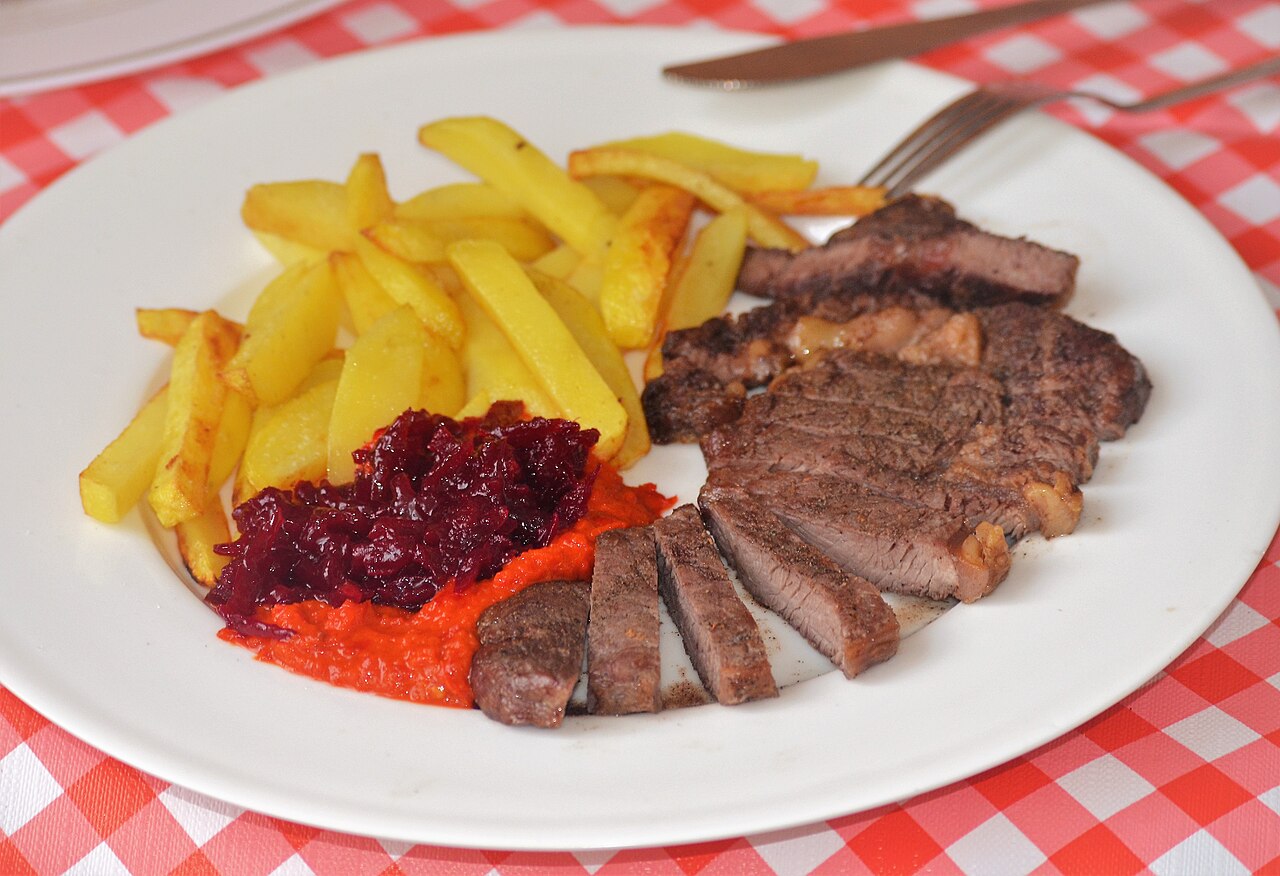
Photo: Silar / CC BY-SA 4.0, via Wikimedia Commons.
During the meal
A couple of small but useful words. The napkin is the square of paper or cloth you put on your lap and use to wipe your mouth; the British sometimes call it a serviette. And a very American habit: with most soft drinks and coffee, you get a free refill, meaning the server tops up your glass again at no extra cost. In many other countries you pay for every glass, so this surprises visitors.
The check and the tip
When you are finished, you ask for the check (this is the British bill, and it is one of the most common mix-ups). You catch the server's eye and say "Could we get the check, please?"
Now the part visitors most need to understand: the tip. In American restaurants, servers are paid a low base wage and depend on tips, so leaving one is not optional politeness but an expected part of the price, normally 15 to 20 percent of the total. The formal word for it, the one printed on the check, is the gratuity; many restaurants add an "automatic gratuity" for large groups. If you are eating at a bar, you may also run a tab, meaning they keep a running total of what you order and you pay it all at the end instead of drink by drink.
Taking it home
Portions in America are famously large, so you will often have food left on your plate, your leftovers. There is no shame in taking them with you: you simply ask the server for a to-go box (an older, friendlier name is a doggy bag), and they bring a container to pack it up. That same word, to-go, is how you order food to eat somewhere else: a coffee "to go," or a whole meal as takeout (the British say takeaway).
Put the words into play
That is a whole meal, in the words Americans actually use for it, plus the two customs, tipping and the entree trap, that catch people out. Learn them and you can walk into any American restaurant and order like a local. Open the At a Restaurant collection above and practice each one in a natural sentence ("We have a reservation for two," "I'll have the salmon entree," "Could we get the check?"), and eating out will feel easy.