At the Grocery Store: The American Words for Food Shopping, Explained
You already know the names of the things in your kitchen. Now let's go buy the food that fills it. The grocery store is somewhere you go every week, and it is packed with words that a textbook never teaches, plus a handful that trip people up because they are spelled nothing like they sound. We will walk the whole trip, from the front door to the parking lot, and explain each word as we go. Where American and British English differ, you will see both.
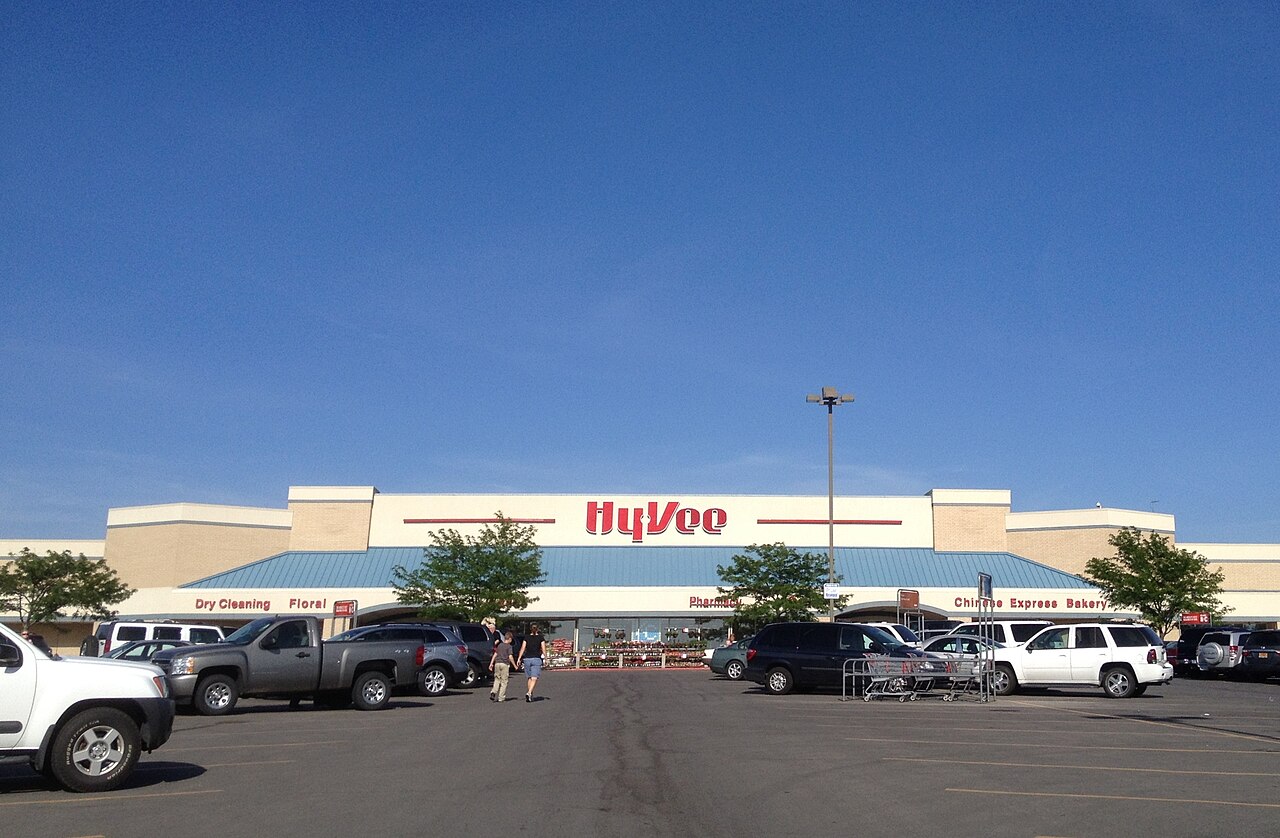
Photo: Mike Kalasnik / CC BY-SA 2.0, via Wikimedia Commons.
The store, a cart, or a basket
The place itself is the grocery store, or simply "the store." Americans say grocery store far more than supermarket (though they use that word too, usually for the big ones). When someone says "I'm going to the store," they almost always mean this one.
On your way in, you grab a cart, the large wheeled metal basket you push up and down the aisles and slowly fill up. Americans say cart (or shopping cart); the British call it a trolley. If you only need a few things, you take a hand-held basket instead, and regret it the moment you are balancing ten items in your arms.
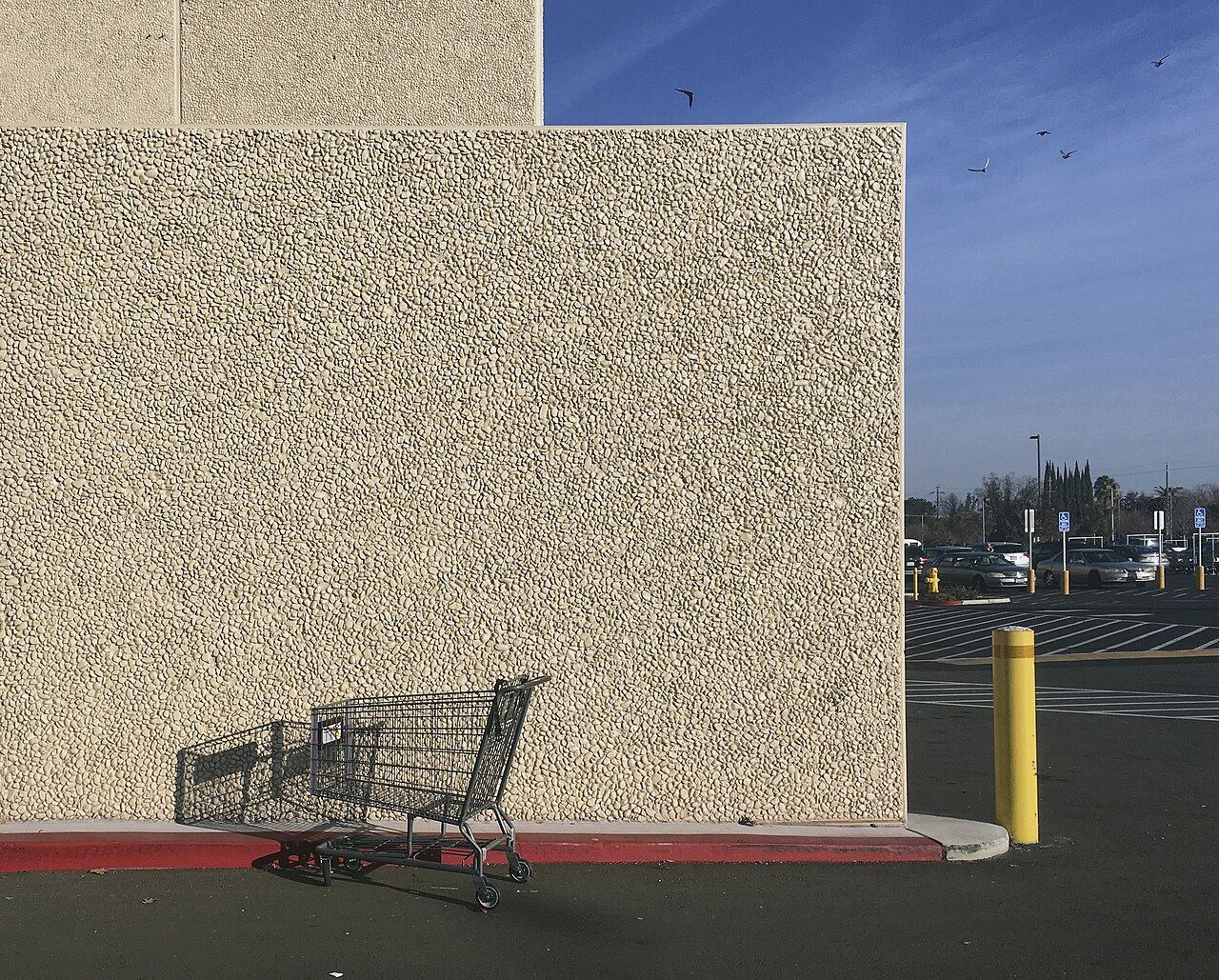
Photo: Robert Couse-Baker from Sacramento, California / CC BY 2.0, via Wikimedia Commons.
Finding your way around
The store is divided into long lanes called aisles. This is one of the tricky ones: the "s" is completely silent, so aisle sounds exactly like "I'll." Each aisle holds one kind of food, and stores number them so you can find things ("cereal is in aisle 7"). The food sits on shelves (one shelf, two shelves) along both sides; something just delivered is "on the shelves," something sold out is "off the shelf."
Around the edges of the store are the fresh departments. The fruit and vegetable area has a special American name: the produce (say PRO-doose). "I'll meet you in produce" is something you will actually hear; the British are more likely to say the fruit and veg.
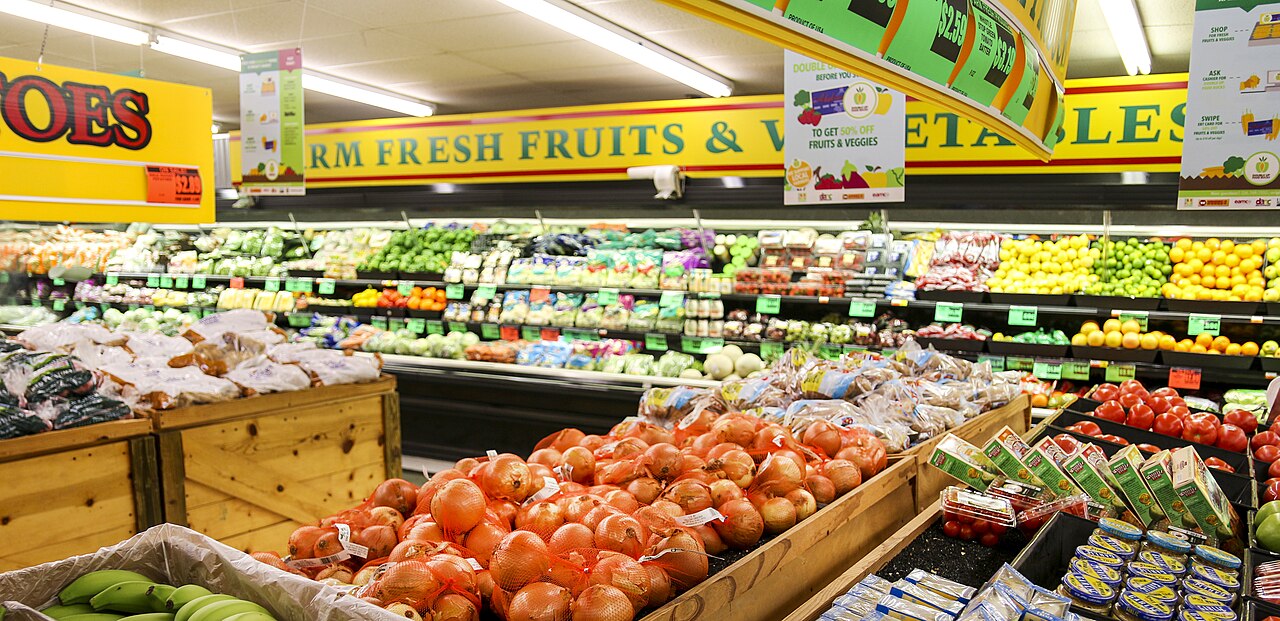
Photo: Alabama Extension / CC0, via Wikimedia Commons.
Near it is the deli, short for delicatessen, the counter where a worker slices meat and cheese to order and sells things like prepared salads. And along one wall stands the freezer section, the row of tall glass-door freezers full of frozen food, from vegetables to ice cream. People call it the frozen aisle or the freezer section.
Paying: the checkout
When your cart is full, you head to the checkout, the row of counters at the front where you pay. To "check out" is also the verb for paying and leaving.
First you join the line, the row of people waiting their turn. This is a famous split: Americans wait "in line," while the British wait "in a queue." Everyone silently asks the same question: "which line is shortest?"
At the counter, you unload your food onto the conveyor belt, the moving black belt that carries it up to the front, and you place a little divider bar behind your items so they do not mix with the next person's. The worker who scans everything and takes your money is the cashier (British English: the checkout assistant). They sit at the register, short for cash register, the machine that adds up the prices and holds the money; the British call it the till. In many American stores there is also a bagger, a helper who packs your food into bags for you, which surprises visitors from countries where you always bag your own. When you are done, you are handed a receipt, the printed slip listing everything you bought. Note the silent "p": it is said RE-seet. Keep it if you might return something.
Coupons, bags, and doing it yourself
Two last things. If you have a coupon (say KOO-pon), a paper or digital voucher for money off a product, you hand it over or scan it before you pay; the British call it a voucher. And your food goes home in a grocery bag, paper, plastic, or a reusable one you brought yourself, which is why a cashier may ask "paper or plastic?"
Finally, if you are in a hurry with just a few items, you can skip the cashier entirely and use the self-checkout, the machine where you scan and pay for your own groceries. It is quick, until it freezes and announces "unexpected item in the bagging area."
Put the words into play
That is a full trip to the store, in the words Americans really use for it. None of them are hard once you have met them, and a few (aisle, produce, receipt, coupon) are worth saying out loud a couple of times so the sound sticks. Open the At the Grocery Store collection above and practice each one in a natural sentence ("Grab a cart," "It's in aisle 5," "Do you have a coupon?"), and your next trip down the aisles will feel completely ordinary.