
At the Doctor: The American Words for Health and Medicine
Nobody enjoys getting sick, but everybody has to talk about it eventually: booking a doctor's appointment, describing an ache to a pharmacist, or just telling a coworker why you sound terrible. The words for health and medicine come up more than you would expect, and American English handles a few of them differently from British English, including some of the most everyday terms. On top of that, the American healthcare system has its own vocabulary that can leave visitors lost. This guide walks through all of it, American English first.
As with the rest of this series, the aim is to explain the words, not just list them, so they stay with you.
Words with two names
Start with the health words that simply change between the US and the UK:
- Pharmacy or drugstore (US) / chemist (UK). The store where you buy medicine. Americans use pharmacy for the medicine counter and drugstore for the whole shop, which also sells snacks, cards, and shampoo. In Britain it is a chemist.
- Band-Aid (US) / plaster (UK). The small sticky strip you put on a cut. "Band-Aid" is actually a brand name that became the everyday American word; the neutral term is an adhesive bandage.
- Acetaminophen or Tylenol (US) / paracetamol (UK). The common pain and fever medicine. It is the exact same drug, sold under different names. (Ibuprofen, sold as Advil or Motrin, keeps its name on both sides.)
- Shot (US) / jab or injection (UK). An injection of medicine or vaccine. Your yearly flu vaccine is a "flu shot."
- The ER (emergency room, US) / A&E (accident and emergency, UK). The hospital department for serious emergencies.
- Checkup (US) / check-up (UK). A routine visit to make sure you are healthy, even when nothing is wrong.
Describing how you feel
When you are sick, English has a specific way of talking about it. The most common pattern is "I have a..." followed by the problem:
- A fever is a high body temperature.
- A cough and a sneeze are the two classic cold sounds (a "runny nose" completes the set).
- A sore throat is pain when you swallow.
- A headache is pain in your head; a stomachache is pain in your stomach.
- A rash is red, irritated skin.
For pain in a body part, you can also say "my (body part) hurts": my back hurts, my knee hurts. And two everyday phrases cover the general feeling of being unwell: "I feel under the weather" (a little sick) and "I have a cold" or "I have the flu" (short for influenza).
At the pharmacy
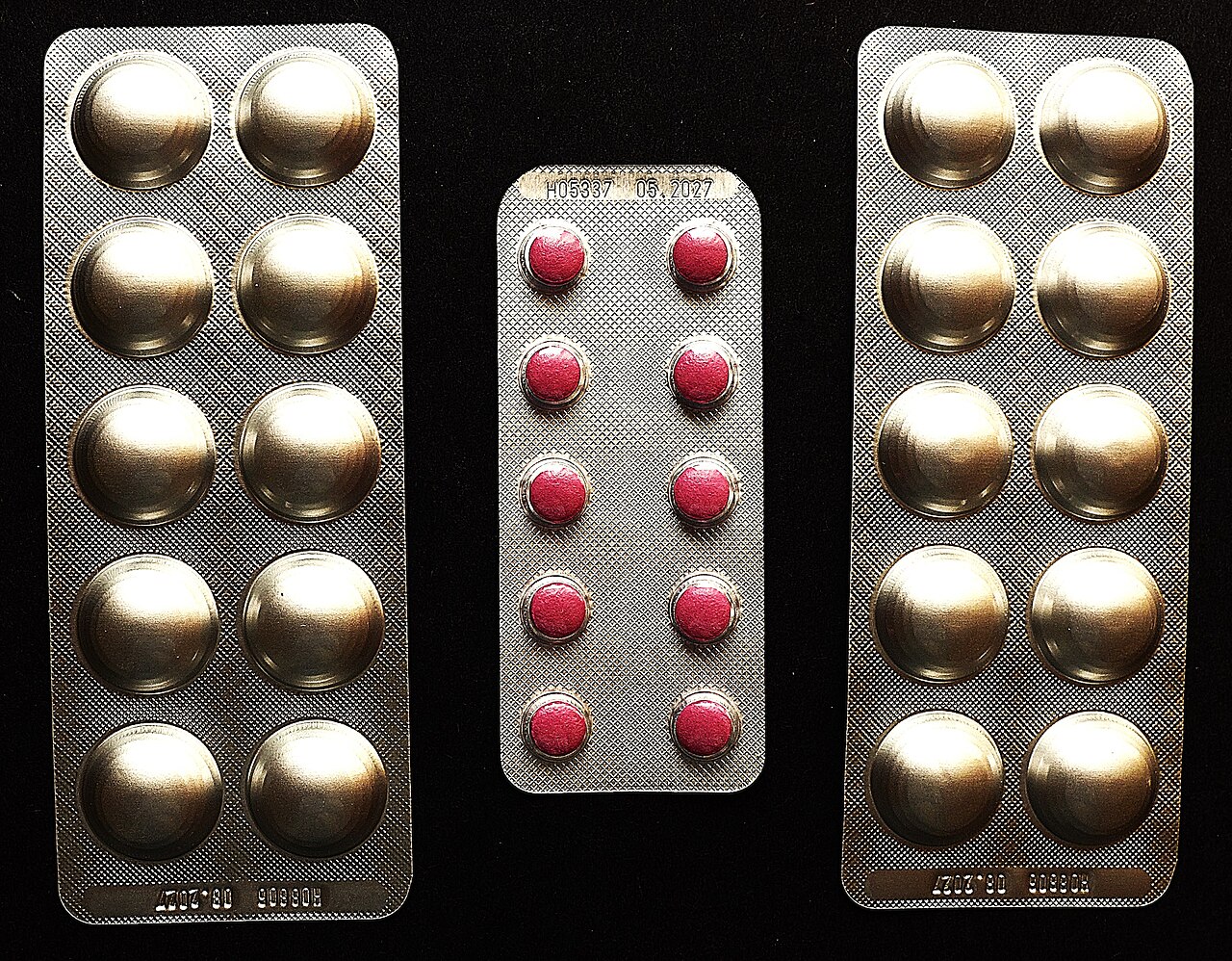
Once you know what is wrong, you head to the pharmacy. The words there sort medicine by how you get it and what shape it takes:
- A prescription is medicine a doctor must order for you. Medicine you can buy off the shelf without one is over-the-counter (often shortened to "OTC").
- Medicine comes as a pill, a tablet (a pressed disc, like the ones above), or a capsule (a smooth case you swallow whole). Liquid medicine is measured in a dose.
- When your prescription runs out, you ask the pharmacy for a refill.
- The pharmacist is the expert behind the counter who fills your prescription and can answer questions.
Injuries and the emergency room

Accidents need their own vocabulary, from minor scrapes to the hospital:
- A sprain is a stretched or twisted joint, like a rolled ankle; a break (or fracture) is a cracked bone.
- A broken bone is set in a cast, a hard shell that holds it still, and you may walk with crutches, the supports that go under your arms.
- A deep cut may need stitches to close it, while a small one just needs a bandage or a Band-Aid, shown above.
- In a real emergency, you call an ambulance (dial 911) and go to the ER. For smaller problems that still cannot wait, Americans go to urgent care, a walk-in clinic that is faster and cheaper than the ER.
The American healthcare maze
The US healthcare system runs on its own set of words, and knowing them saves a lot of confusion:
To see a doctor, you make an appointment by phone or online. Arrive a little early, because you will fill out forms and show your insurance card at the front desk.
Putting it all together
With these words, you can handle the whole path from feeling sick to feeling better: describe your symptoms, make an appointment, get a prescription, pick it up at the pharmacy, and rest until the fever passes. Keep the British twins (chemist, plaster, paracetamol, jab) in mind for when you watch a UK show, and remember the American extras like copay and urgent care. Since we all reach for that "under the weather" phrase, our guide to talking about the weather is a natural next read.
Want these words to come out automatically? The collection below turns every term in this article into flashcards and quick quizzes, so the right health word is ready when you need it most.