
Talking About the Weather in American English
Weather is the safest, most common small talk in America. Strangers in an elevator, coworkers by the coffee machine, a cashier ringing you up: any of them might open with "Hot enough for you?" or "Can you believe this rain?" Knowing how to answer, and how to start the conversation yourself, makes you sound natural fast. The trick is that English has a surprisingly rich set of words for weather, and the right one tells people exactly what you mean.
This guide walks through the words for the seasons, the temperature, the sky, and the storms, American English first. As with the rest of this series, the aim is to explain the words, not just list them, so they stay with you.
The four seasons
The year turns through four seasons, and one of them has two names:
- Spring is the warming season when plants grow back (roughly March to May).
- Summer is the hot season (June to August).
- Fall (US) / autumn (UK) is the cooling season when leaves change color and drop, like the trees at the top of this article. Americans mostly say fall, from "the fall of the leaves," while the British say autumn. Both words are understood everywhere, but fall is the everyday American choice.
- Winter is the cold season (December to February).
How hot, how cold
Americans have a ladder of words for temperature, from bitter cold to blazing hot. From coldest to warmest:
- Freezing means very cold, at or below the point where water turns to ice.
- Chilly is cold enough to want a jacket, but not painful.
- Cool is mildly cold and often pleasant.
- Mild and warm are comfortable, gentle heat.
- Hot is uncomfortably warm.
- Muggy and humid describe hot air that is also heavy with moisture, the sticky feeling of a summer afternoon. Humid is the technical word; muggy is the everyday complaint.
When it falls from the sky
English sorts rain and snow by how hard it is coming down. Reaching for the exact word makes your English sound precise:
- Drizzle is very light rain, barely more than mist.
- Rain is the ordinary word for water falling from the sky.
- A downpour (or "pouring rain") is heavy, drenching rain. When it is really coming down, Americans say "it's pouring."
- Sleet is a cold mix of rain and partly frozen ice, common in winter.
- Hail is small balls of solid ice that fall during some thunderstorms, sometimes big enough to dent a car.
- Snow falls in cold weather. Light, scattered snow is called flurries; a thin layer that barely covers the ground is "a dusting."
Wind and sky
The air and the clouds have their own vocabulary:
- A breeze is a light, pleasant wind.
- A gust is a sudden, strong burst of wind.
- Overcast means the sky is completely covered in gray cloud.
- Clear means no clouds at all, and partly cloudy is the mix in between, the phrase you will hear most often in a forecast.
When the weather turns wild
America is a big country with big weather, and it has dramatic words to match. These are the storms worth knowing:
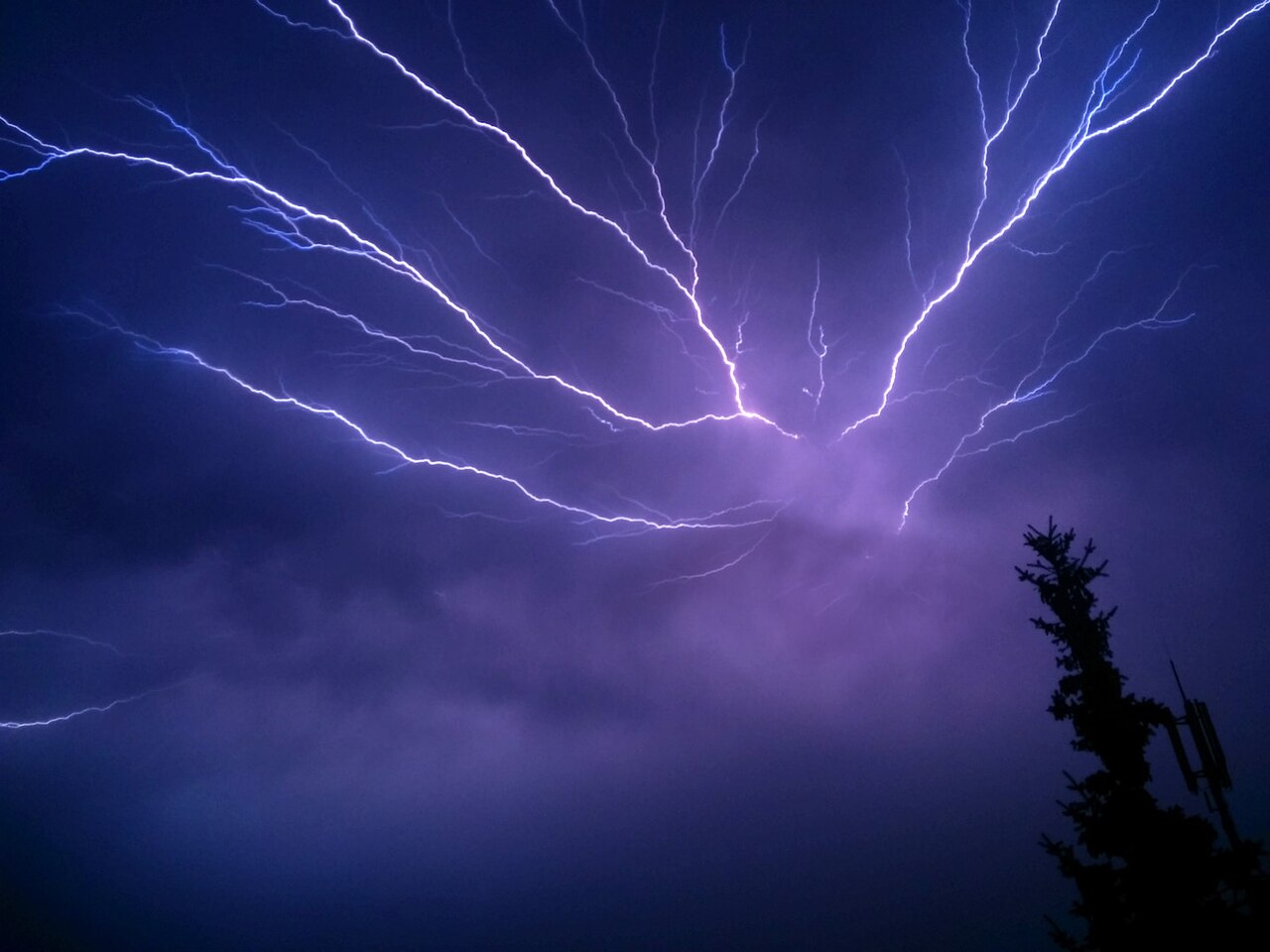
- A thunderstorm brings heavy rain along with thunder (the loud rumble) and lightning (the bright flash, shown above). A useful phrase: light travels faster than sound, so you see the lightning before you hear the thunder.
- A tornado is a violent, spinning column of wind that touches the ground. The central US sees so many that the region is nicknamed "Tornado Alley." Informally, Americans also call one a "twister."
- A hurricane is a huge tropical storm with powerful wind and rain that forms over the ocean and strikes coastal areas, mostly from summer into fall. (The same storm is called a "typhoon" in the western Pacific.)
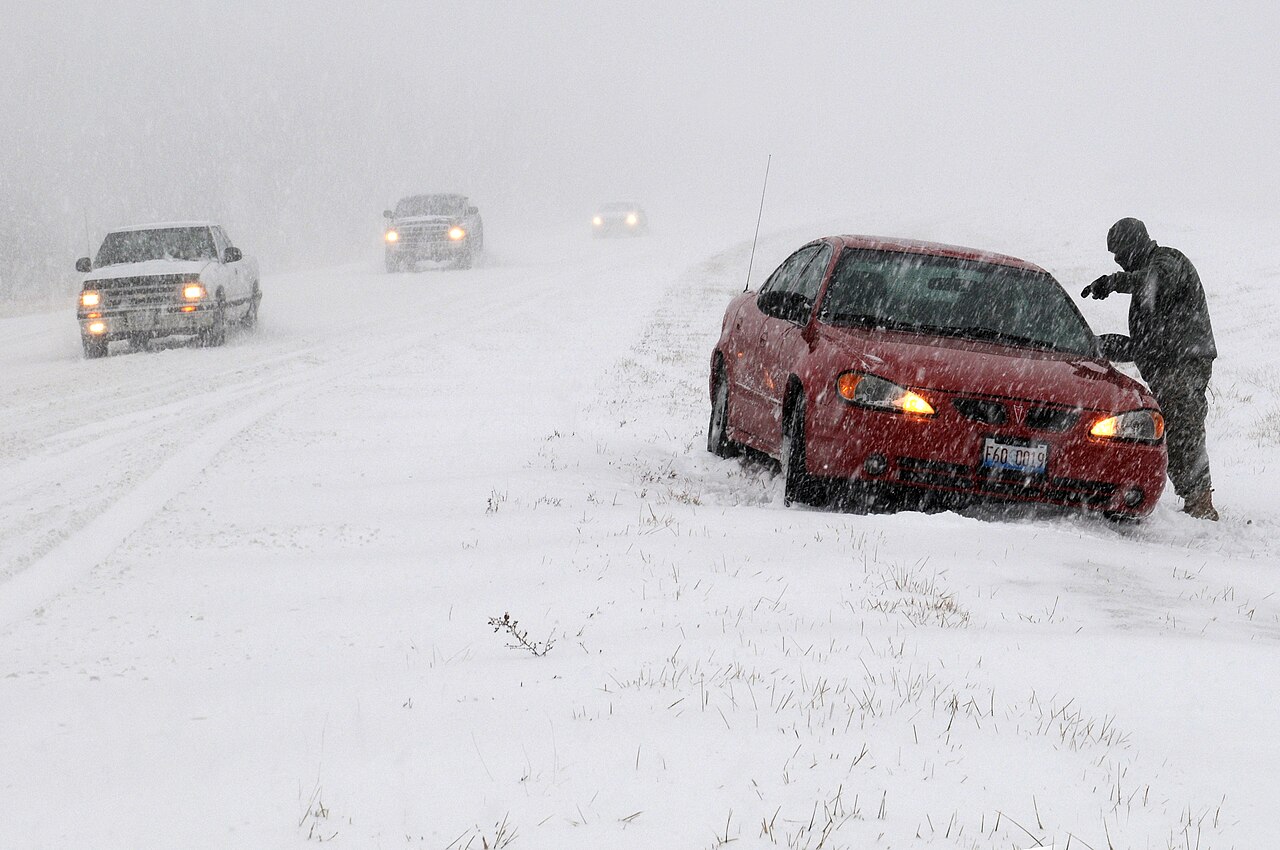
- A blizzard is a severe snowstorm with strong wind that makes it hard to see, like the one above. A blizzard can shut down a whole city, cancel flights, and close schools with a "snow day."
Talking about it
The daily prediction of the weather is called the forecast, and you will hear it constantly: "the forecast says rain tomorrow." A few phrases make you sound like a local:
- "It's freezing out there." (very cold)
- "It's really coming down." (raining or snowing hard)
- "Looks like rain." (rain seems likely)
- "Beautiful day, isn't it?" (a friendly opener on a nice day)
Putting it all together
The next time someone mentions the weather, you have the words to answer with precision: it is not just "cold," it is chilly or freezing; it is not just "raining," it is a drizzle or a downpour. Learn the American temperature scale, keep the fall and autumn pair in mind, and you will handle any weather small talk that comes your way. For more everyday American English, our guide to driving on the road covers the words you need once you head out into that weather.
Want these words to come out automatically? The collection below turns every term in this article into flashcards and quick quizzes, so the right weather word is always ready.