On the Road in America: The Words for Streets, Signs and Highways
You already know the parts of a car. Now let's take it out of the driveway and onto the American road, because the road has a whole language of its own, and it is one of the places where American and British English differ the most. This is a long one, so take it a section at a time. The goal is not just to recognize each word, but to know when and how you would actually say it.
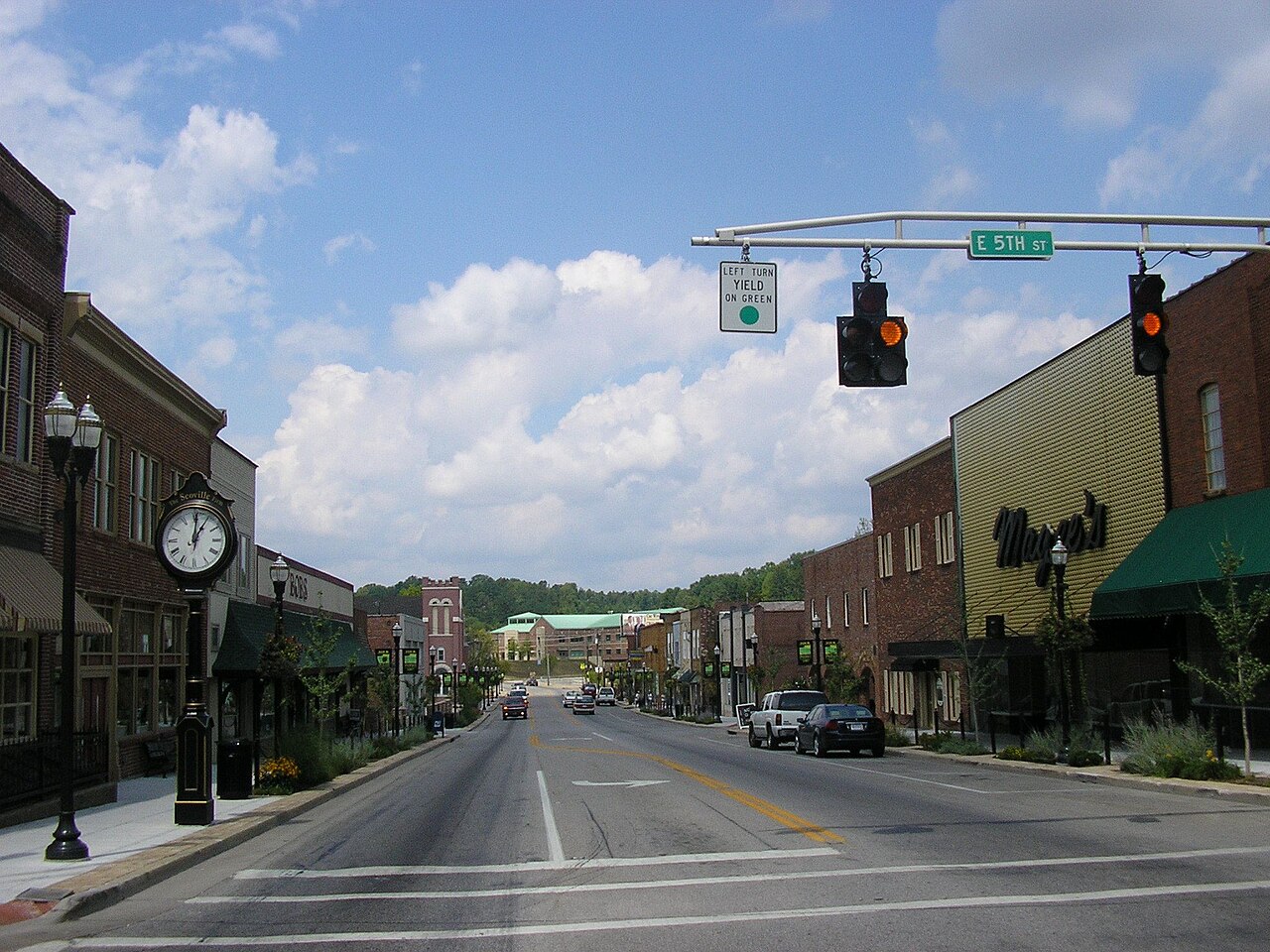
Photo: w.marsh / CC BY 2.0, via Wikimedia Commons.
On foot: the sidewalk
Before we drive anywhere, look at the edges of the street.
The paved path along the side of the road, the part meant for people on foot, is the sidewalk. It is where a parent tells a child to "stay on the sidewalk," away from the cars. This is one of the classic US-UK splits: the British call it the pavement, which is confusing, because in American English pavement means the hard road surface itself.
Between the sidewalk and the road runs the curb, the raised edge of stone or concrete. You "step off the curb" to cross the street, and you "pull up to the curb" when you park. (The British spell the same word kerb.)
The safe place to cross is the crosswalk, usually painted as thick white stripes on the road. At a busy one, a signal flashes a white "WALK" or a red hand to tell you when to go. In Britain, a striped pedestrian crossing is called a zebra crossing.
And that short, capped iron pipe standing on the sidewalk is a fire hydrant. Firefighters screw their hoses onto it to reach the water main. It matters to drivers too: you are not allowed to park in front of one, and a car being towed away "for blocking a hydrant" is a very American sight.
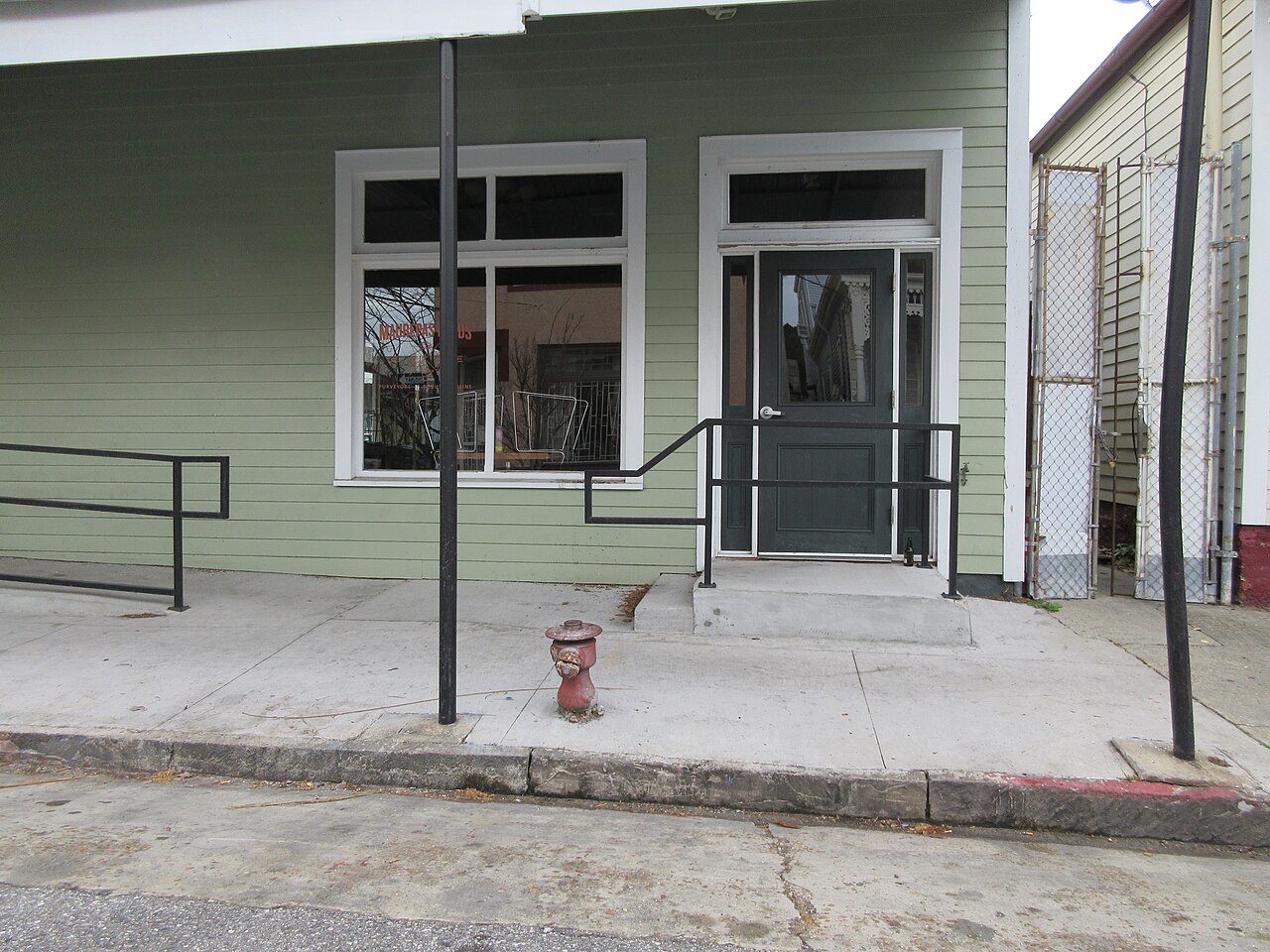
Photo: Infrogmation of New Orleans / CC BY 2.0, via Wikimedia Commons.
Where streets cross
The place where two roads meet and cross is an intersection. American directions lean on this word constantly: "turn right at the next intersection," "the store is two blocks past the intersection." British English usually says junction or crossroads.
Most busy intersections are controlled by a traffic light, the familiar red-yellow-green signal. One very American rule catches visitors out: at most intersections you may "turn right on red," that is, make a right turn after stopping, even while the light is red. (The British say traffic lights, usually in the plural.)
A quieter intersection may have a stop sign instead, a red octagon that simply reads STOP. Unlike a light, it never changes: you must come to a "full stop" even if the road is completely empty. A "four-way stop," where every direction has a sign and drivers take turns, is a small American ritual of politeness and confusion.
The road itself is divided into lanes, the marked strips wide enough for one line of cars. A wide road has several, and each has a name in everyday speech: the "left lane" (often the faster one), the "right lane," a "turn lane." When you move from one to another, you "change lanes," and you always signal first. You may also meet a speed bump, a raised ridge built across the road, common in parking lots and neighborhoods, that forces you to slow right down.
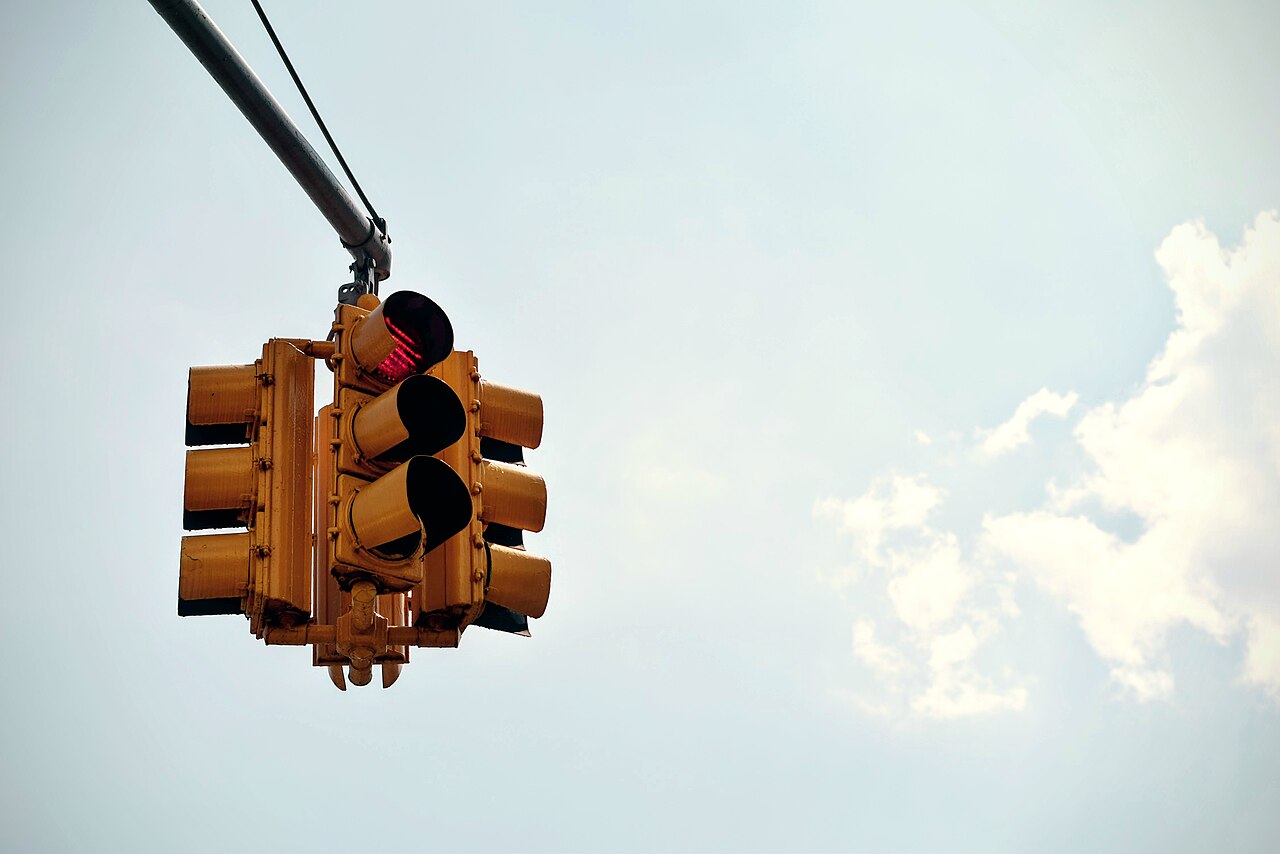
Photo: Tim Gouw punttim / CC0, via Wikimedia Commons.
Out on the highway
Leave town and you get onto a highway (many Americans also say freeway, and interstate for the big numbered national routes). A highway is a large, fast road with no traffic lights and no crosswalks, built to carry cars long distances. The British word is motorway.
Running along the very edge of the highway is the shoulder, a paved strip that is not for driving. If your car breaks down, you "pull over onto the shoulder," put on your hazard lights, and wait there safely. (In Britain this is the hard shoulder.)
Down the middle, separating the traffic going in opposite directions, is the median, sometimes a strip of grass, sometimes a solid concrete barrier. British English calls it the central reservation.
You do not turn off a highway at an intersection; you take an exit ramp, the curving side road that lowers you back down to ordinary streets. (The ramp you drive up to join the highway is the on-ramp.) You will hear "take the next exit" far more often than any street name. Where one road needs to cross another without meeting it, one is carried over the top on an overpass, a bridge for the road (the British say flyover).
On some highways, bridges, and tunnels you have to pay a small fee, called a toll, at a toll booth, though these days the payment is often automatic and you barely slow down.
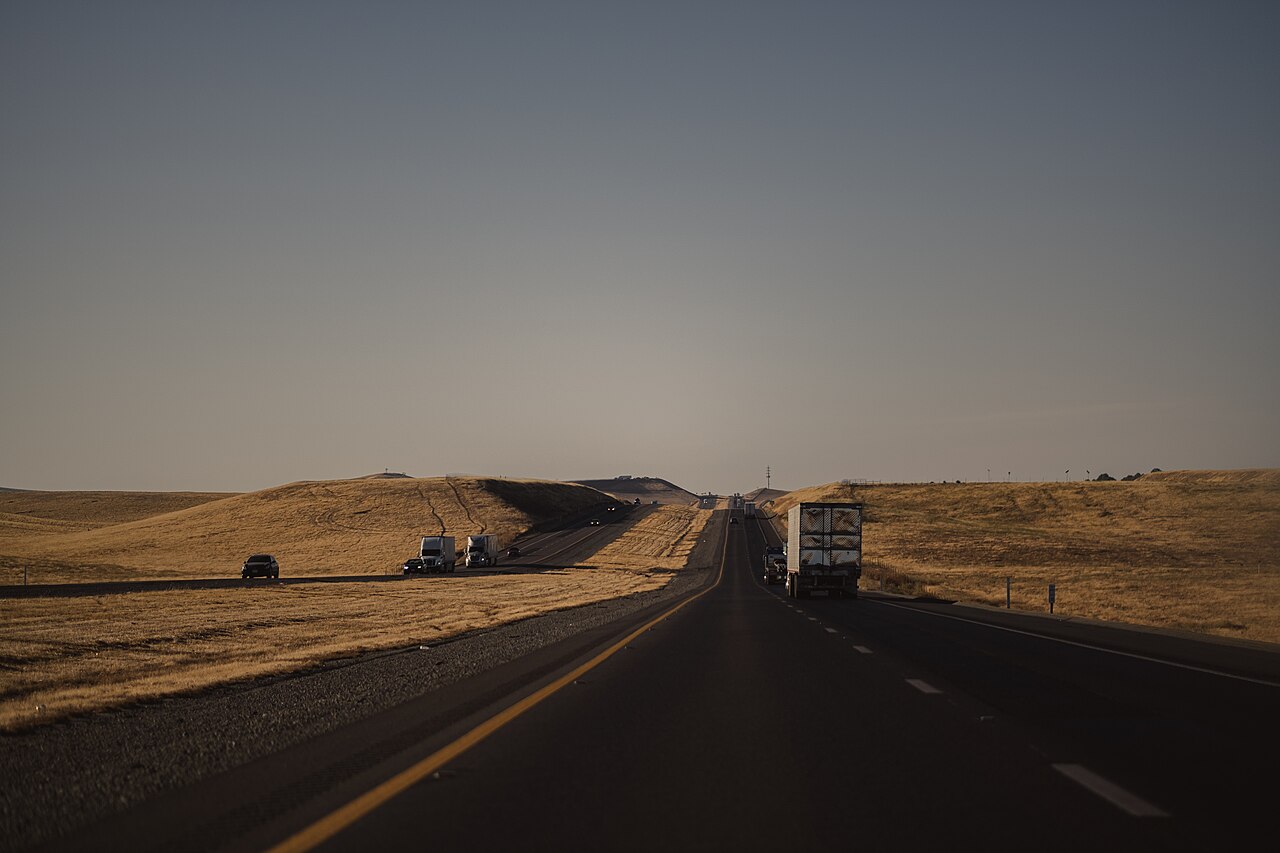
Photo: Levi Meir Clancy / CC0, via Wikimedia Commons.
Filling up and parking
Sooner or later the car needs fuel. You buy it at a gas station ("gas" is short for gasoline), so you "get gas" or "fill up the tank" before a long trip. The British call the same place a petrol station.
When you arrive somewhere, you have to leave the car. A large open area for many cars, the kind outside a supermarket or a mall, is a parking lot (British: car park). If instead you park on the street in a town, you often have to feed a parking meter, the small machine at the curb where you pay for a set amount of time. Let the meter run out and you may come back to a "parking ticket" tucked under your wiper.
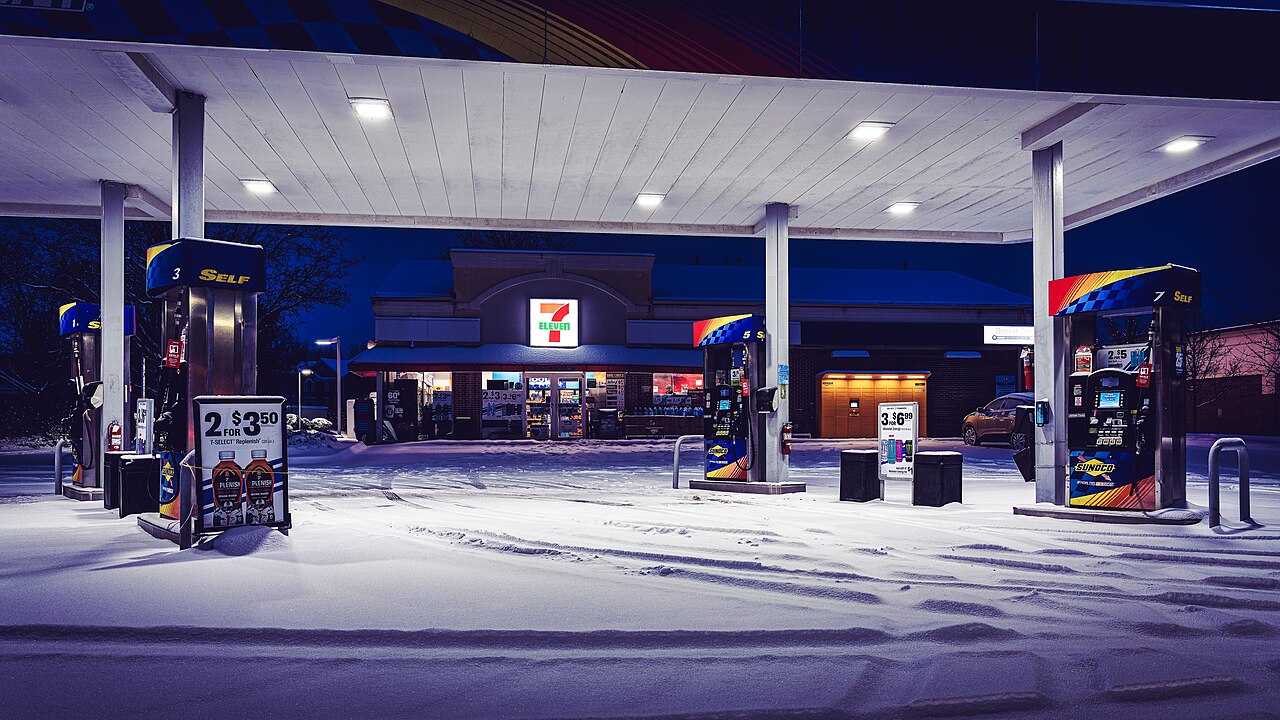
Photo: Mobilus In Mobili / CC BY-SA 2.0, via Wikimedia Commons.
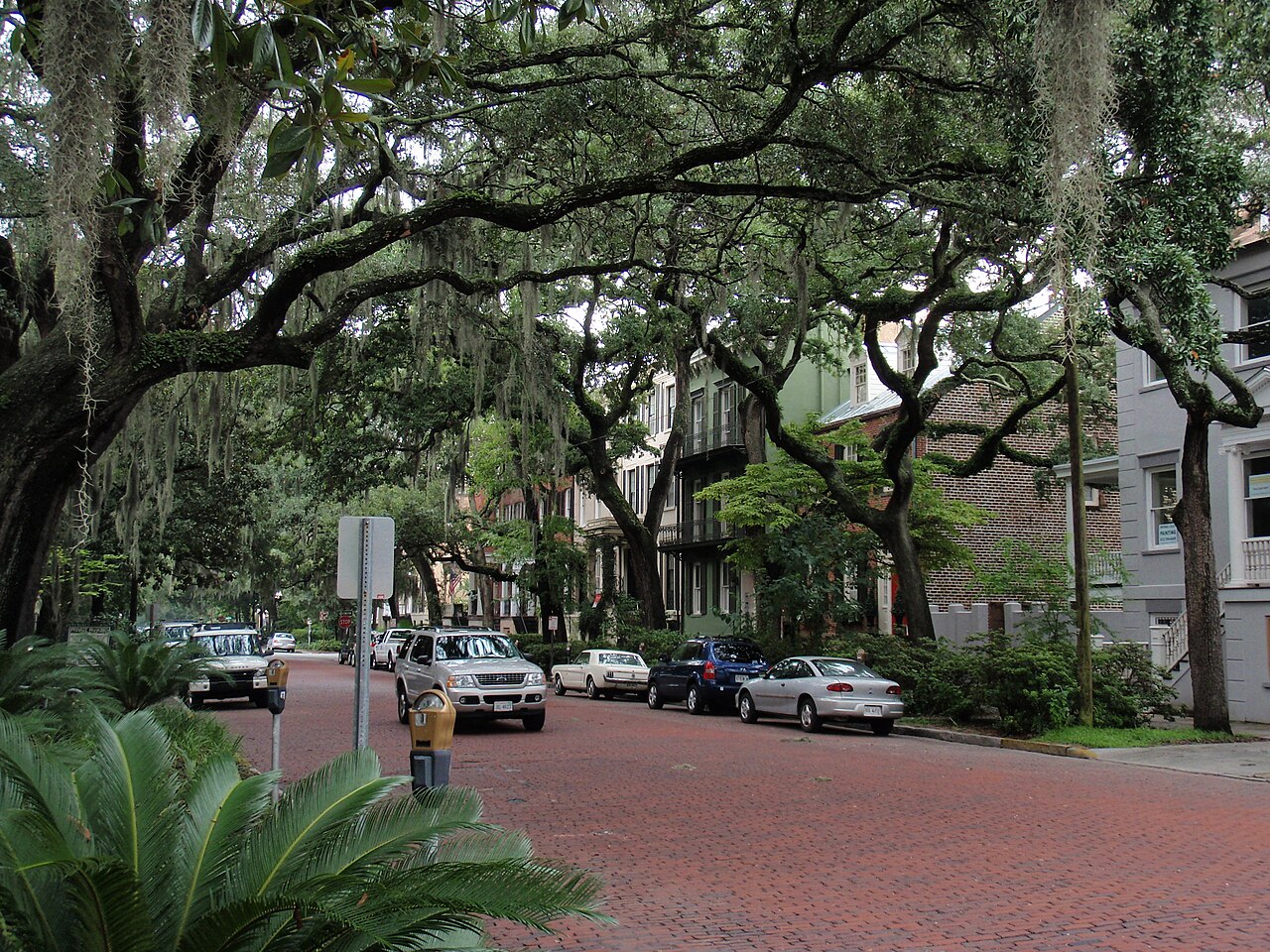
Photo: XeresNelro / CC BY-SA 4.0, via Wikimedia Commons.
Put the words into play
That is the American road, from the sidewalk outside your door to the highway across the state. These are the words that fill real directions, road signs, and driving lessons, and knowing them turns a confusing trip into an easy one. Open the On the Road collection above and practice each one in a natural sentence ("Pull over onto the shoulder," "Take the next exit," "I need to get gas"), and the next time you are behind the wheel in America, the road will be speaking your language.