Football in Action: The English Words for What Players Do
You have learned the parts of the field. Now the ball starts moving, and the English speeds up with it. "Great tackle!" "What a save!" "He's caught offside again." These words describe the actions of the game, the things players actually do, and they come at you fast.
If you have not read it yet, our guide to the parts of a soccer field names everything on it. This time we name the actions. Learn this set, and you will follow not just where things are, but what is happening.
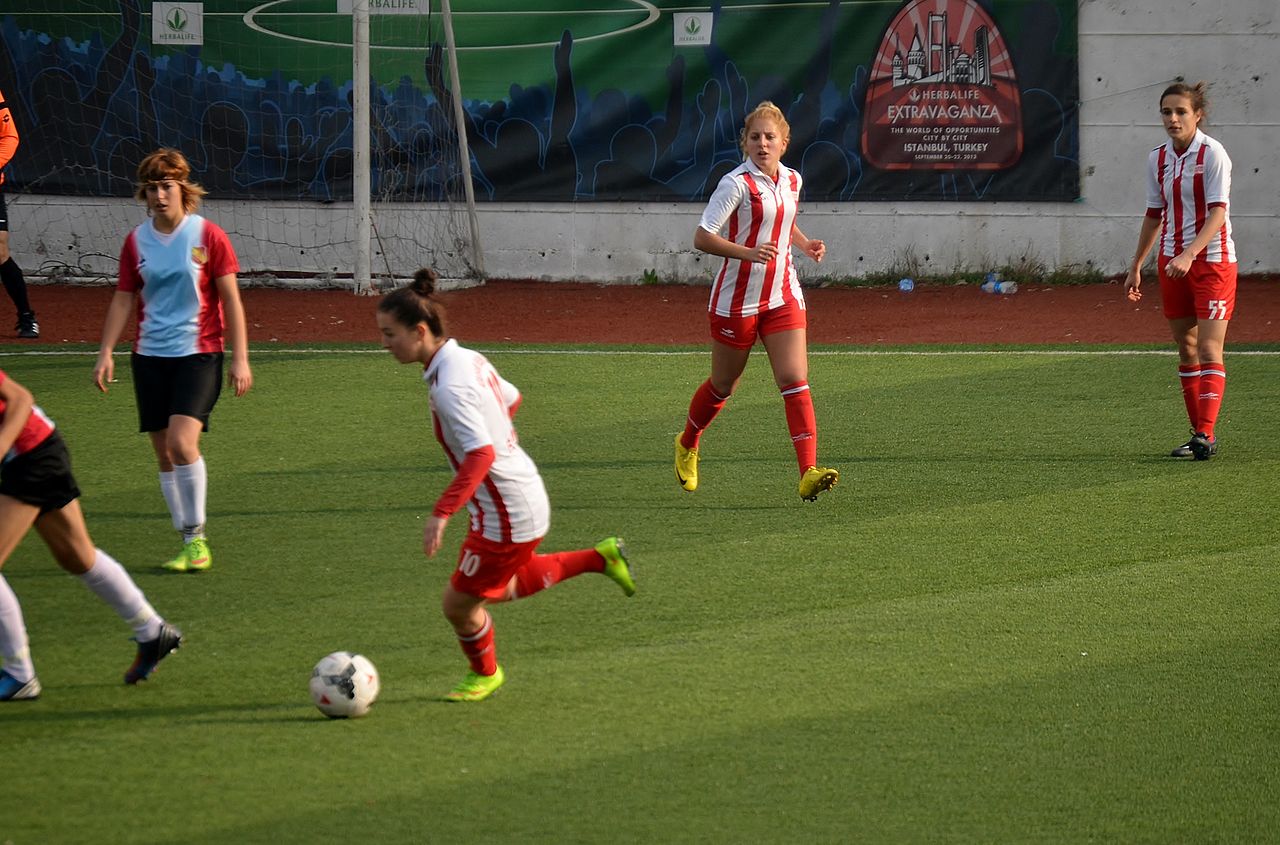
Photo: CeeGee / CC BY-SA 4.0, via Wikimedia Commons.
Moving the ball forward
The simplest action is the pass: you kick the ball to a teammate. A pass played from the side of the field into the middle is called a cross, because the ball travels across the front of the goal.
When a player keeps the ball at their feet and runs with it past opponents, they dribble. A good dribble can beat two or three defenders before anyone gets a touch.
Winning the ball back
When your team does not have the ball, you try to win it back.
To tackle is to challenge an opponent and take the ball away, often by sliding in with one foot. If you mistime it and hit the player instead of the ball, the referee calls a foul.
A defender who stays close to an opponent to stop them receiving the ball is said to mark them. And when the ball is dangerous near your own goal, a defender makes a clearance, kicking or heading it far away to safety.
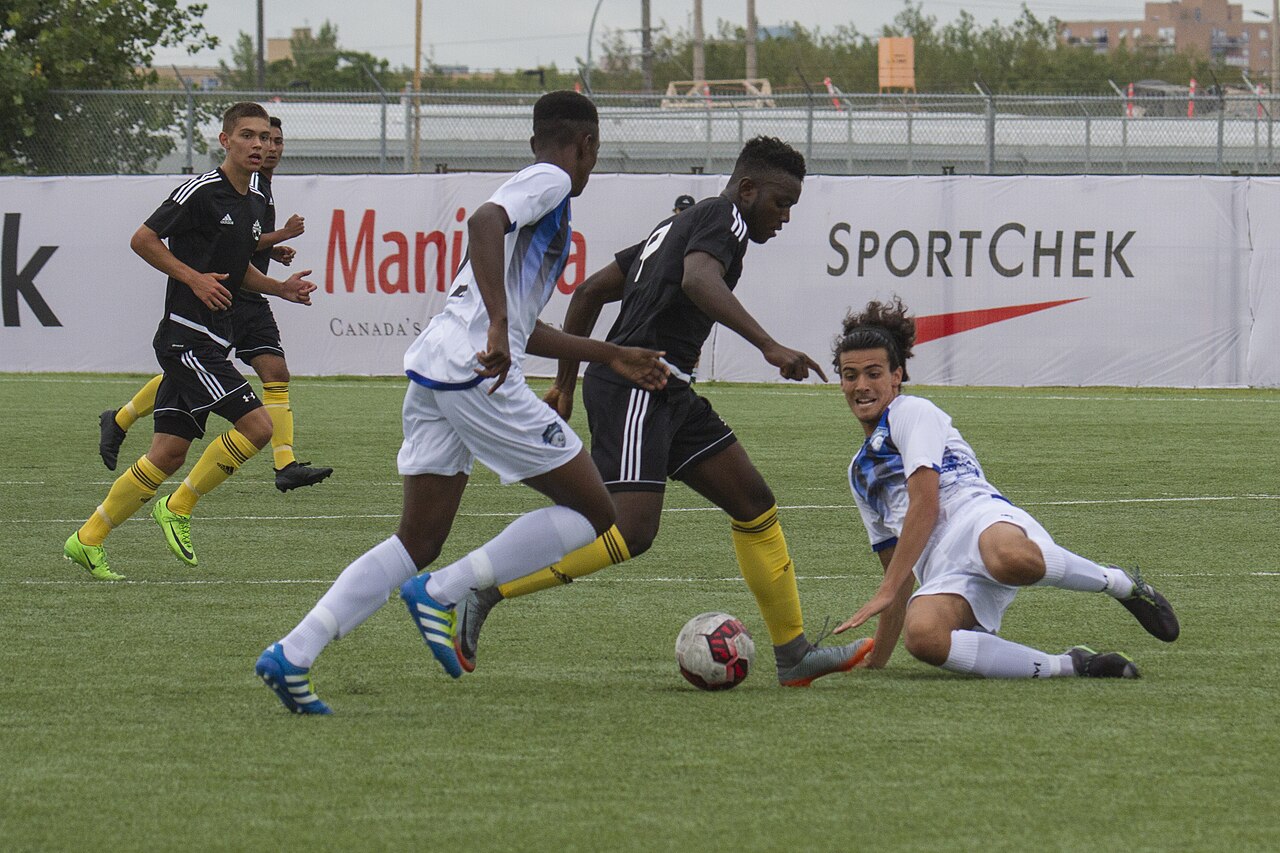
Photo: 2017 Canada Summer Games / CC BY 2.0, via Wikimedia Commons.
Winning it in the air
Not every ball stays on the ground. When a player jumps and hits the ball with their forehead, that is a header. Players use headers to score, to clear danger, and to pass. Timing the jump is everything.
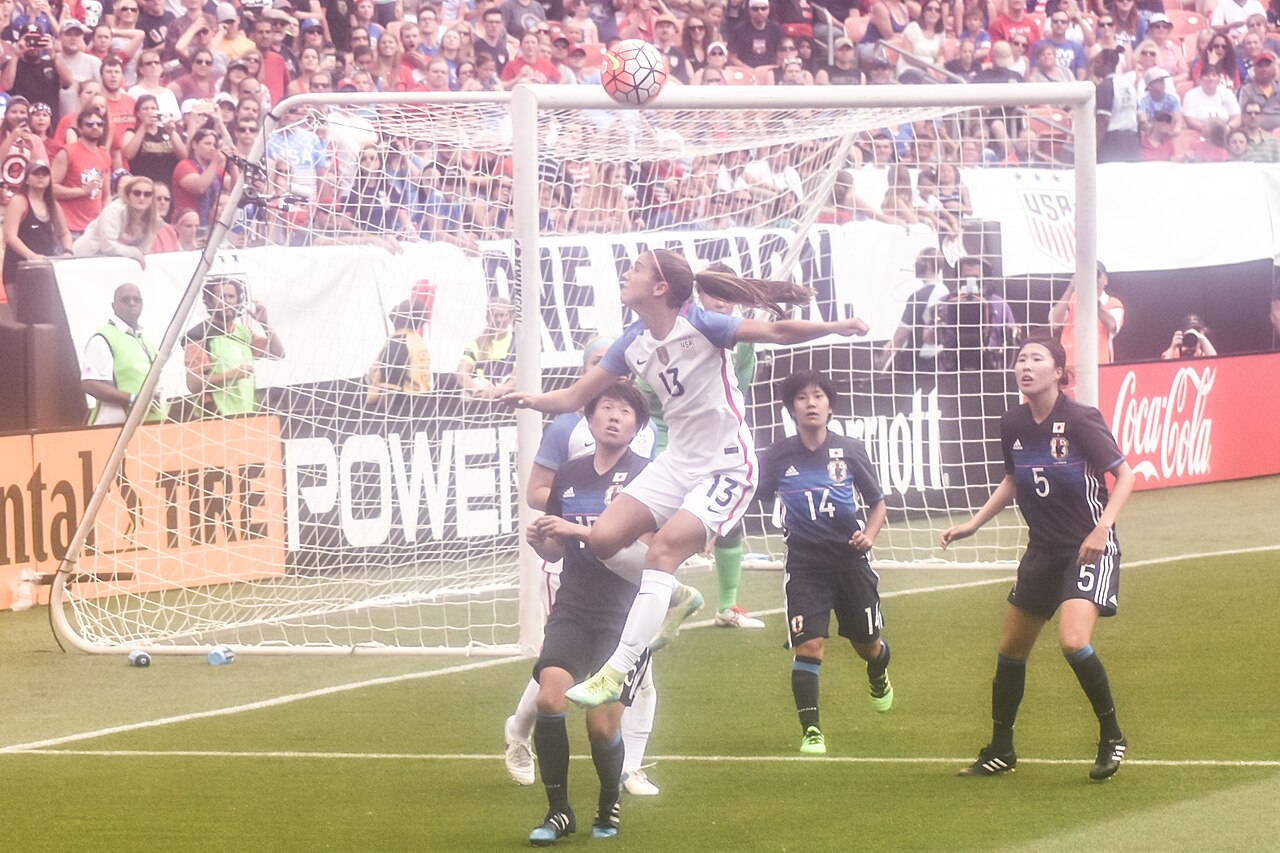
Photo: Erik Drost / CC BY 2.0, via Wikimedia Commons.
The last line: the goalkeeper
The goalkeeper is the only player allowed to use their hands, and only inside their own penalty area. When the keeper stops a shot (an attempt to score), we say they make a save. A great save, fingertips to the ball, can decide a match.
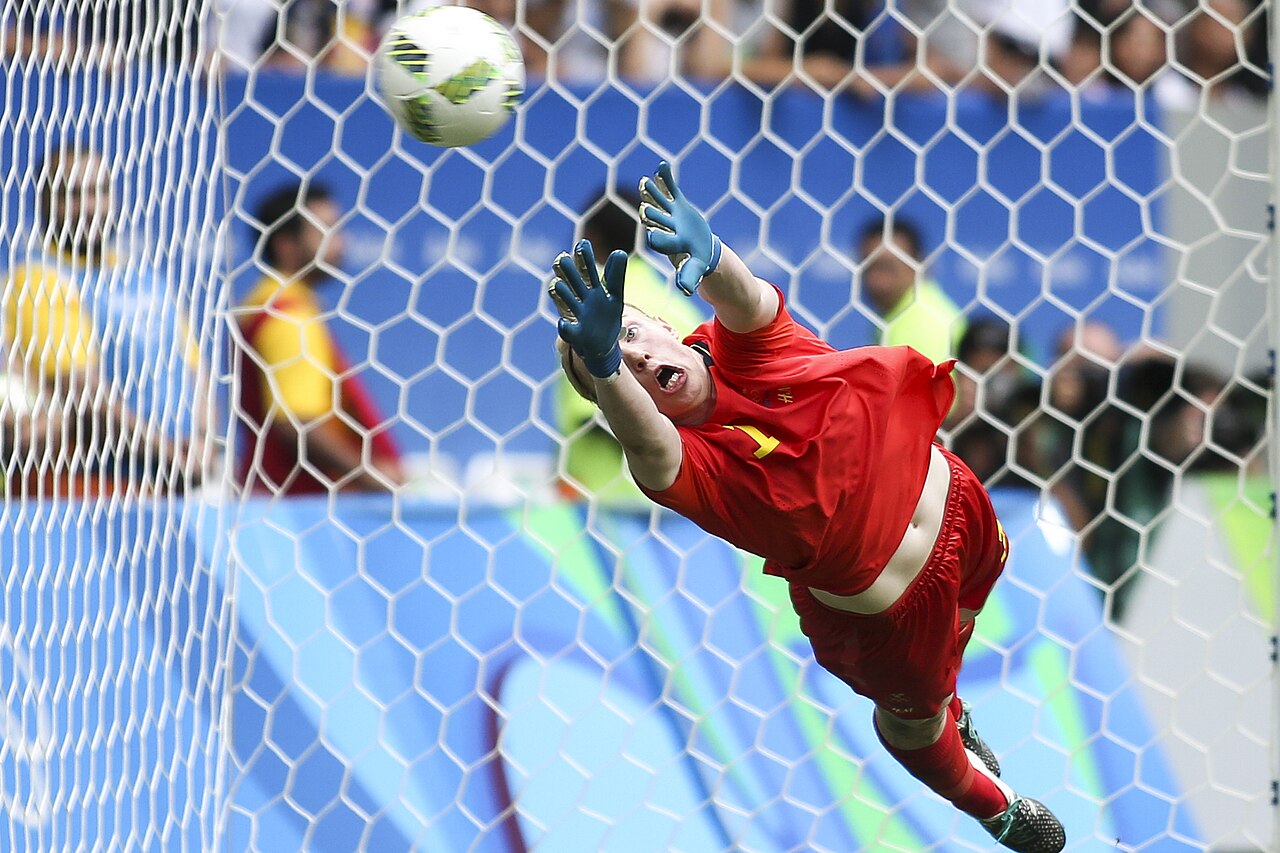
Photo: Agência Brasil Fotografias / CC BY 2.0, via Wikimedia Commons.
Restarts and set pieces
The ball often goes out of play, and each restart has its own word.
When the ball crosses the touchline, the other team takes a throw-in, throwing it back with both hands from behind the head. After a foul, the referee awards a free kick. If the ball crosses the goal line off a defender, the attacking team gets a corner, a kick taken from the corner of the field.
One rule word you will hear constantly is offside: an attacker is offside if they are ahead of the last defenders when the ball is played forward to them. It is the hardest rule to see, and the one fans argue about most.
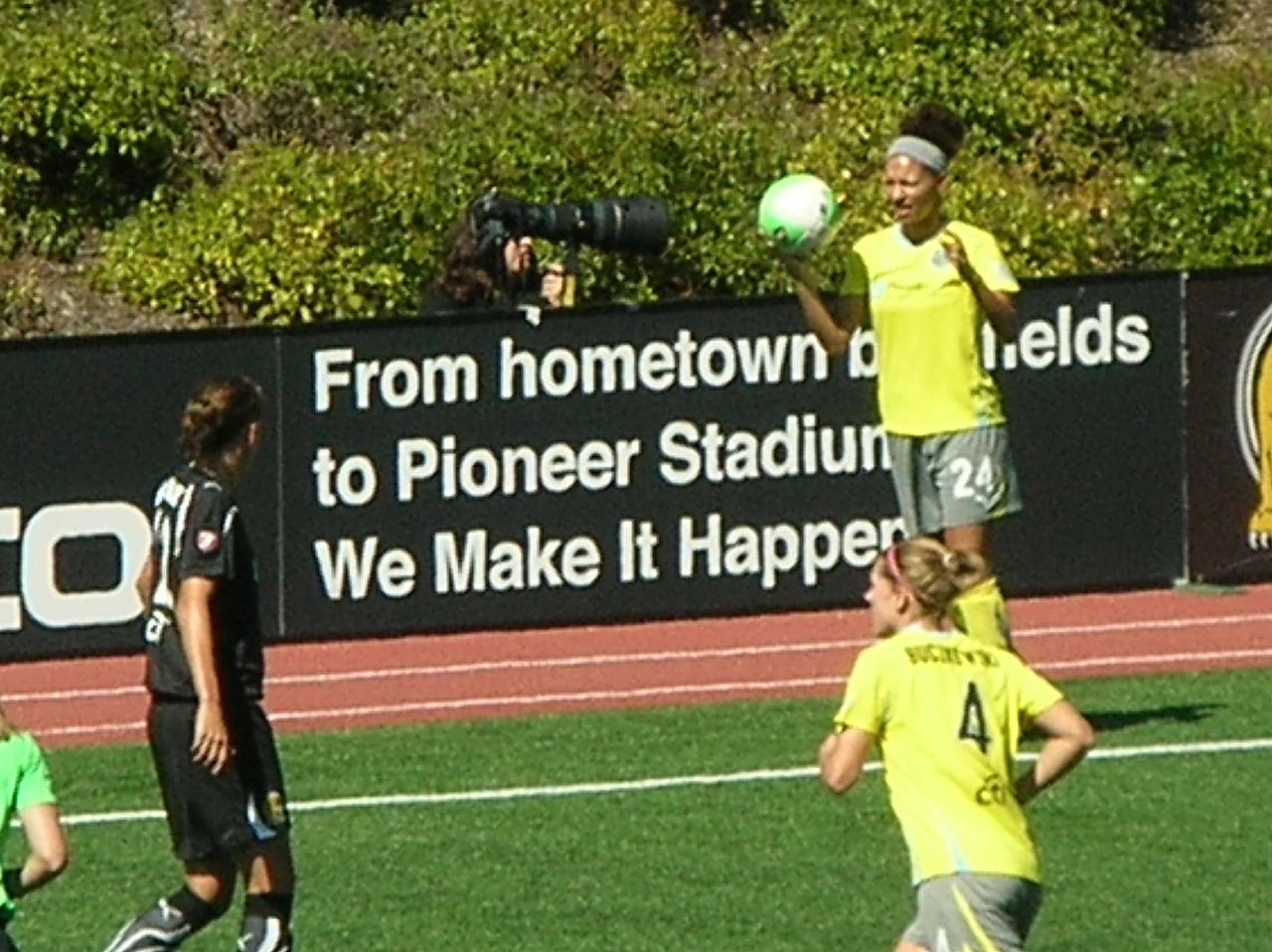
Photo: BrokenSphere / CC BY 3.0, via Wikimedia Commons.
Put the words into play
Now you have both halves of the language: the parts of the field, and the actions that happen on it. Together they turn fast English commentary into something you can follow word by word. Open the Football in Action collection above, practice each word in real sentences, and watch your next match as a quiet, enjoyable English lesson.