What's in a Garden? The English Words for the Great Outdoors
We have been all through the house, naming the everyday objects in the kitchen, the bathroom, the bedroom and the living room. Now we open the back door and step out into the one "room" with no roof.
A quick note before we start. In American English, the green space around a house is usually the yard (or backyard), and the word garden is saved for the patch where you actually grow flowers or vegetables. In British English, the whole space, lawn and flowers and all, is simply the garden. Either way, the things in it have wonderfully specific names, and almost none of them turn up in a textbook. Let's fix that.
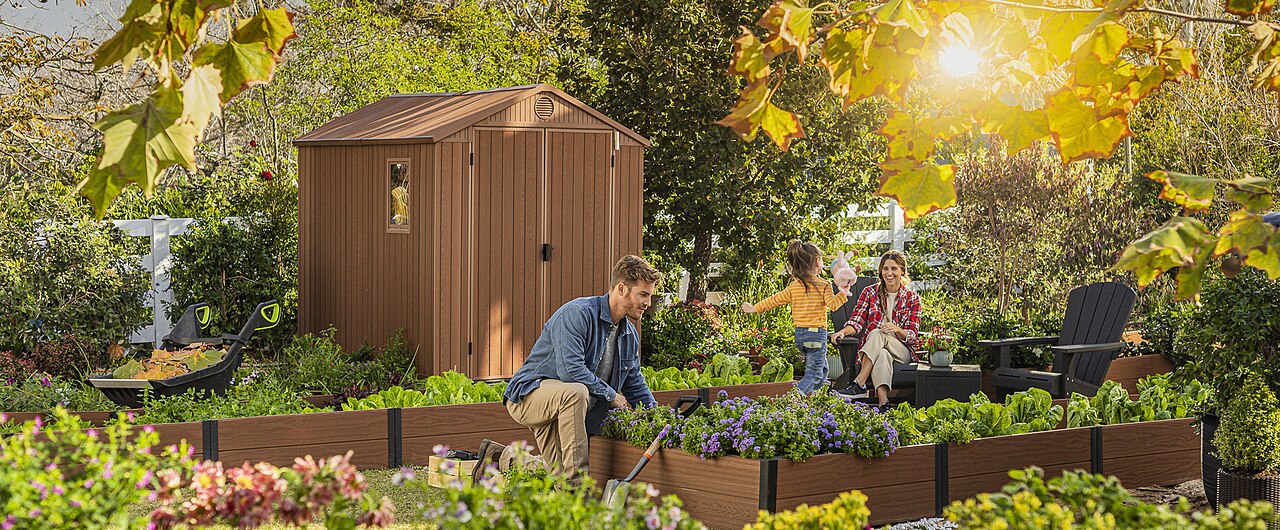
Photo: Keter68 / CC BY-SA 4.0, via Wikimedia Commons.
The layout of a yard
The flat area of cut grass is the lawn. Along the edges, a strip of soil planted with flowers is a flowerbed. Most yards are enclosed in some way: a row of bushes grown close together into a living green wall is a hedge, while a barrier of wood or wire is a fence, with a gate where you walk in and out.
The garden buildings
Almost every yard has a shed, a small wooden hut where the tools, the pots and the lawnmower are kept. A keen gardener might also have a greenhouse, a little building with glass walls and a glass roof that traps the sun's warmth, so that tender plants can grow even when it is cold outside.
Digging and planting tools
Turning the soil is the heart of gardening, and each job has its own tool. A spade has a flat, straight-edged blade for cutting clean holes in the ground (its close cousin the shovel has a curved blade, better for scooping loose material). A garden fork has several thick metal prongs for breaking up hard earth. A rake has a wide row of teeth for gathering fallen leaves and leveling the soil. And for delicate work up close, such as planting a single seedling, you reach for a trowel, a small hand-held spade.
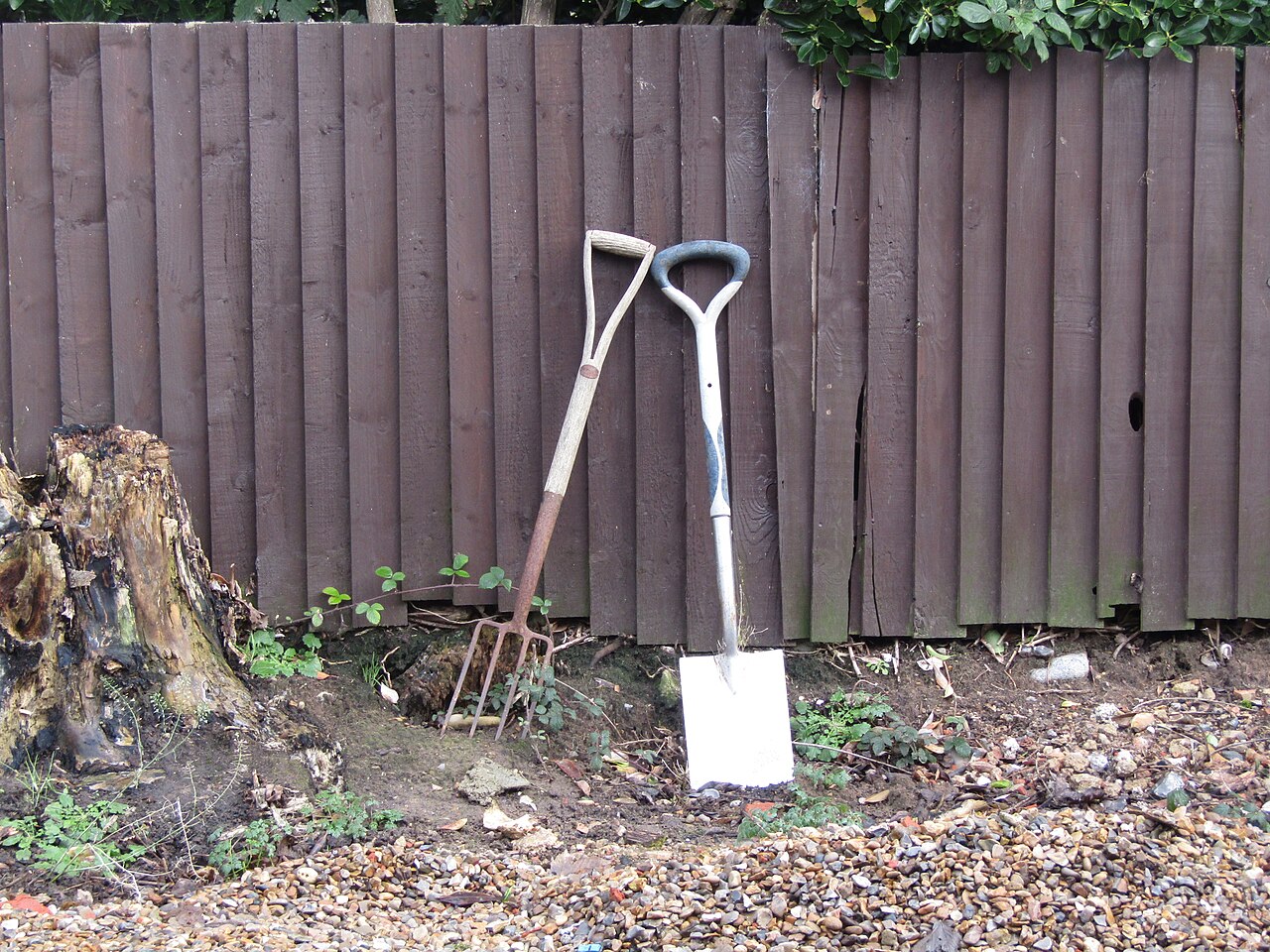
Photo: Kolforn / CC BY-SA 4.0, via Wikimedia Commons.
Watering the garden
On dry days the plants need a drink. For a gentle sprinkle you fill a watering can and tip it up; the water comes out through the rose, the perforated cap on the end of the spout that scatters it softly like rain. For a bigger area, you screw a hose, a long flexible tube, onto the outdoor faucet and let the water flow.
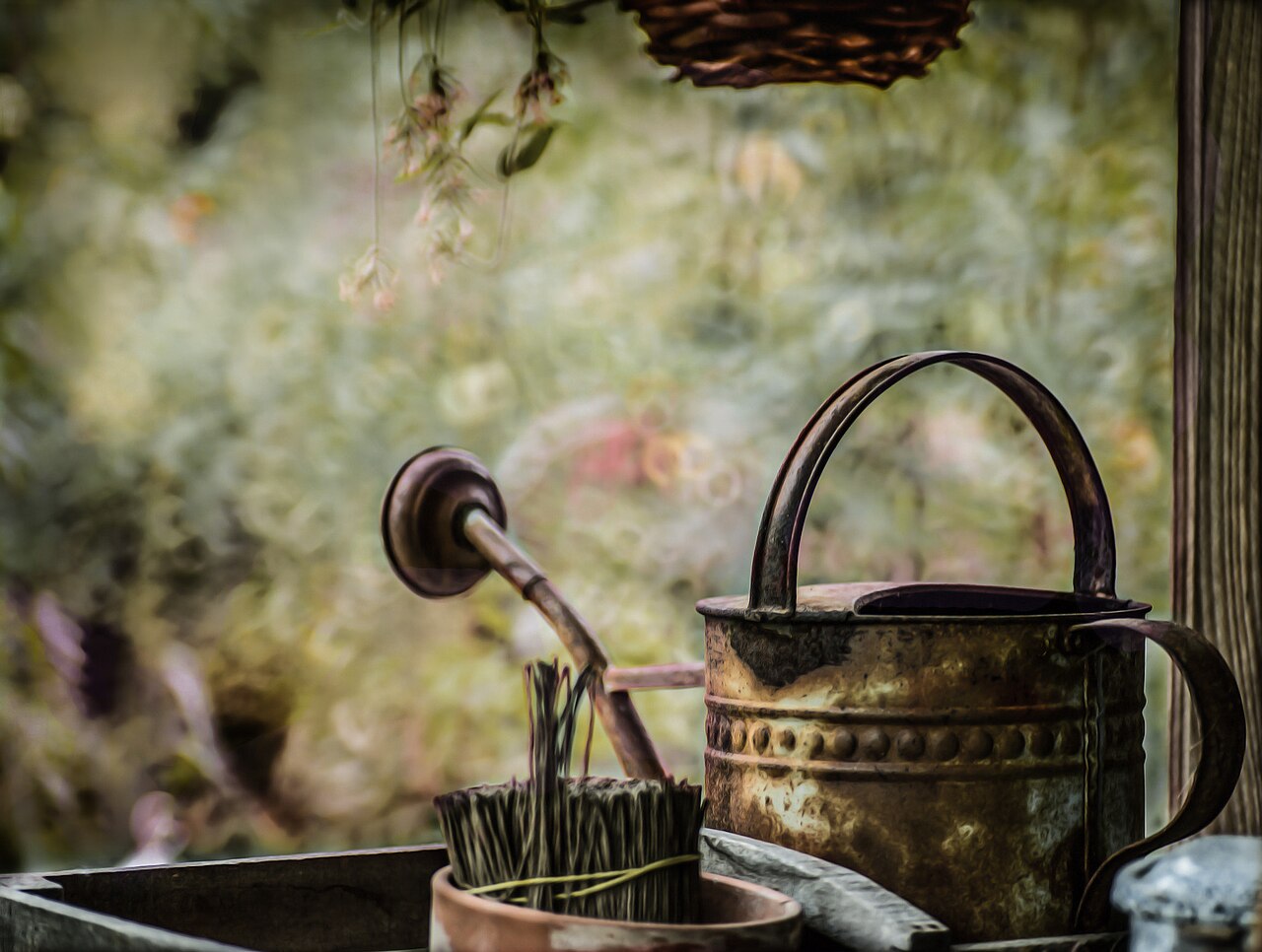
Photo: Magdalena Roeseler / CC BY 3.0, via Wikimedia Commons.
Cutting the grass
A lawn will not stay neat on its own. To keep it short you push a lawnmower up and down across the grass; it shaves the tops off evenly, and most models catch the cut grass in a bag or box at the back. Mowing the lawn on a Saturday morning is practically a national ritual in the suburbs.
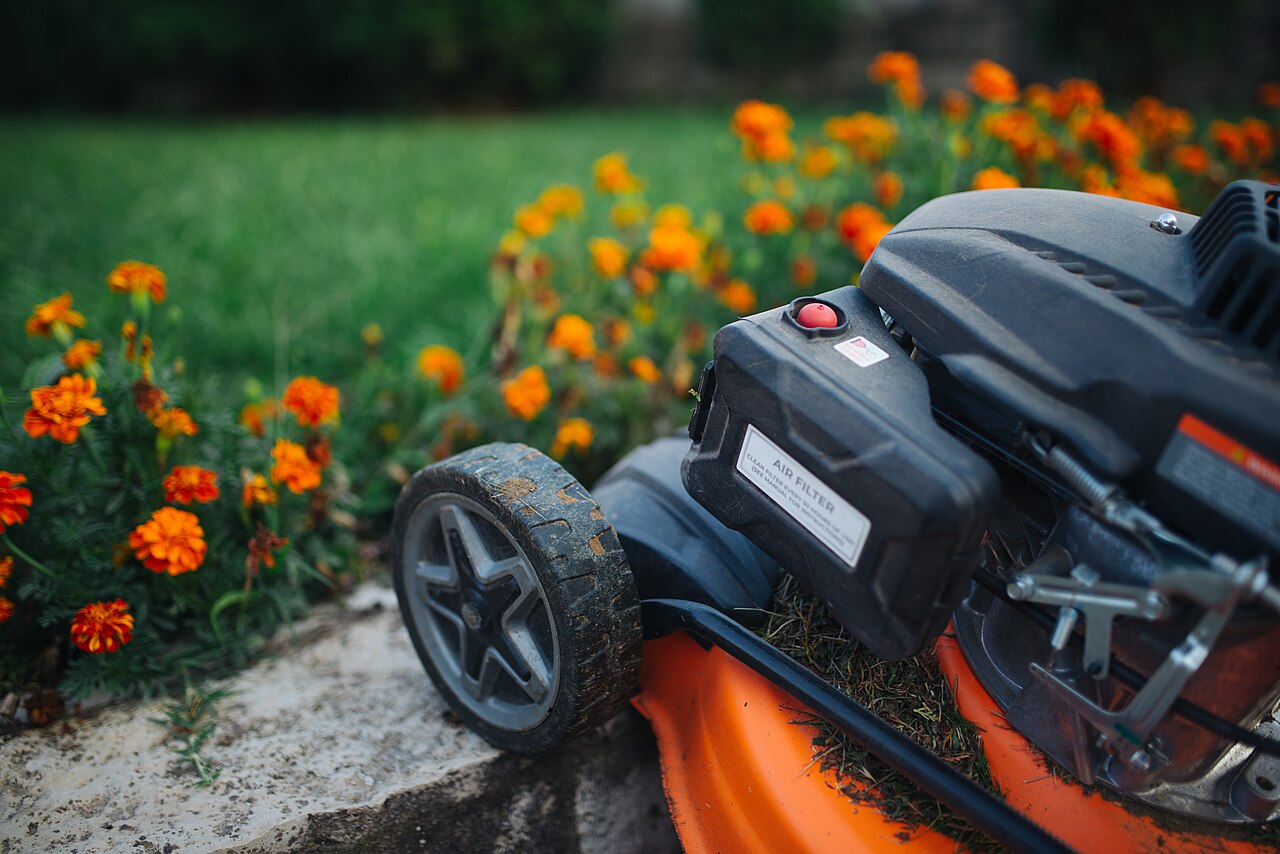
Photo: Shixart1985 / CC BY 2.0, via Wikimedia Commons.
Pots, compost and weeds
Not everything has to grow in the ground. A plant can live perfectly well in a flowerpot filled with compost, the dark, rich, rotted-down plant matter that feeds the roots. To move heavy loads of soil or cuttings around the yard, you use a wheelbarrow, a single-wheeled container with two long handles you lift and push. And the one job that never ends, in any yard, is pulling up the weeds, the wild plants that always seem to grow exactly where you did not want them.
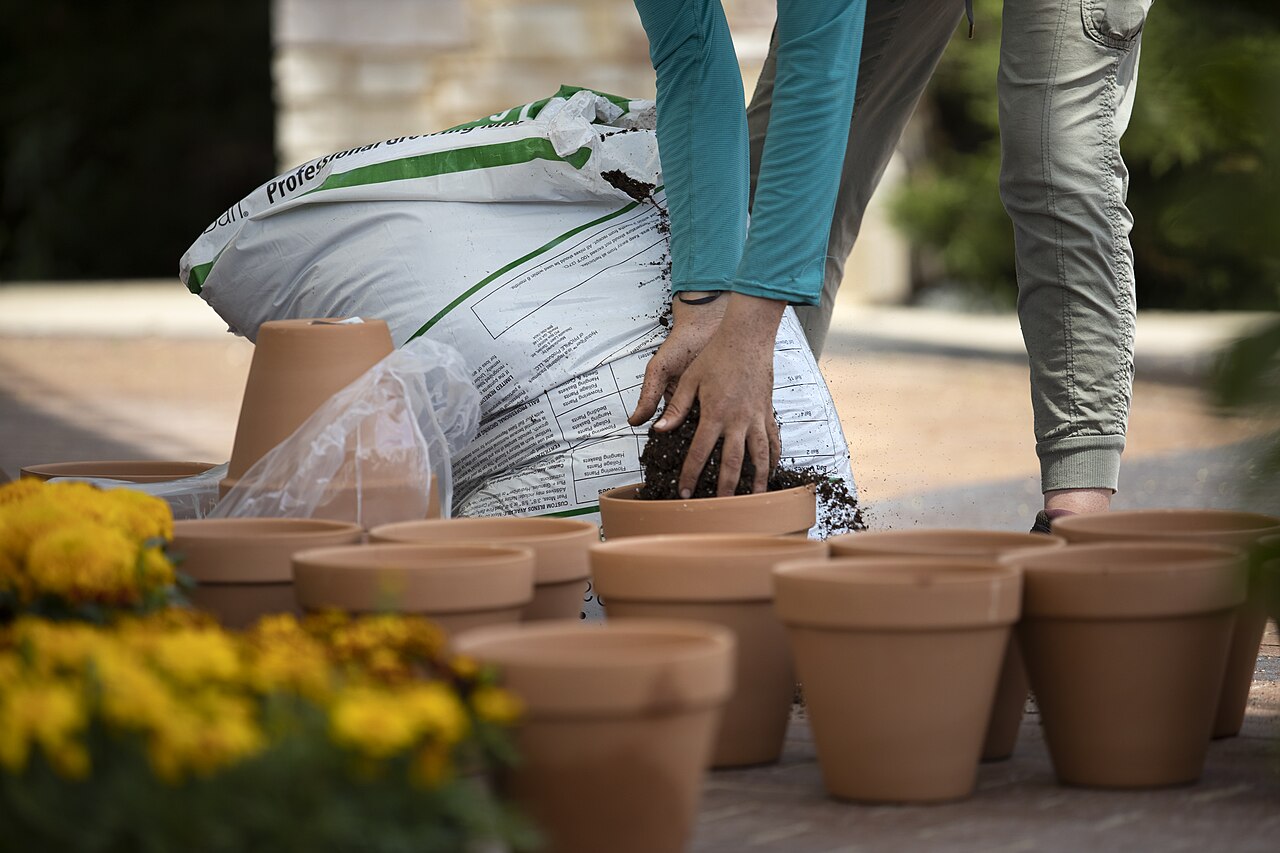
Photo: COD Newsroom / CC BY 2.0, via Wikimedia Commons.
Put the words into play
That completes the whole home, indoors and out: kitchen, bathroom, bedroom, living room, and now the yard. These are the plain, useful, everyday words that real life is built from and textbooks quietly skip. Open The Garden collection above, practice each one in a simple sentence ("Mow the lawn", "Fill the watering can", "Pull up those weeds"), and the next time you step outside, you will have a name for everything around you.