Money in English: The American Words for Coins, Bills, and Banking
Money comes up every single day, and it is one of the trickier corners of American English for newcomers. The coins do not have their values printed in big numbers; instead, each one has a name you simply have to know. The bills all look nearly the same shade of green. And several everyday money words are different in British English. This guide sorts it all out, American English first, starting with the coins that confuse almost everyone.
The coins: penny, nickel, dime, and quarter
American coins are known by name, not by number, so you have to learn which name is worth what. There are four you will use constantly:
- A penny is worth 1 cent (1¢). It is the only copper-colored coin.
- A nickel is worth 5 cents (5¢). It is thick and silver-colored.
- A dime is worth 10 cents (10¢). Here is the classic trap: the dime is the smallest coin of all, even though it is worth more than the penny and the nickel. Size does not equal value.
- A quarter is worth 25 cents (25¢). It is the biggest of the four and the one you will use most, for parking meters, laundry, and vending machines.
Two larger coins exist, the half-dollar (50¢) and the dollar coin ($1), but Americans rarely use them. All the small coins you carry are called your change (also "loose change," "pocket change," or "spare change").
Bills and cash
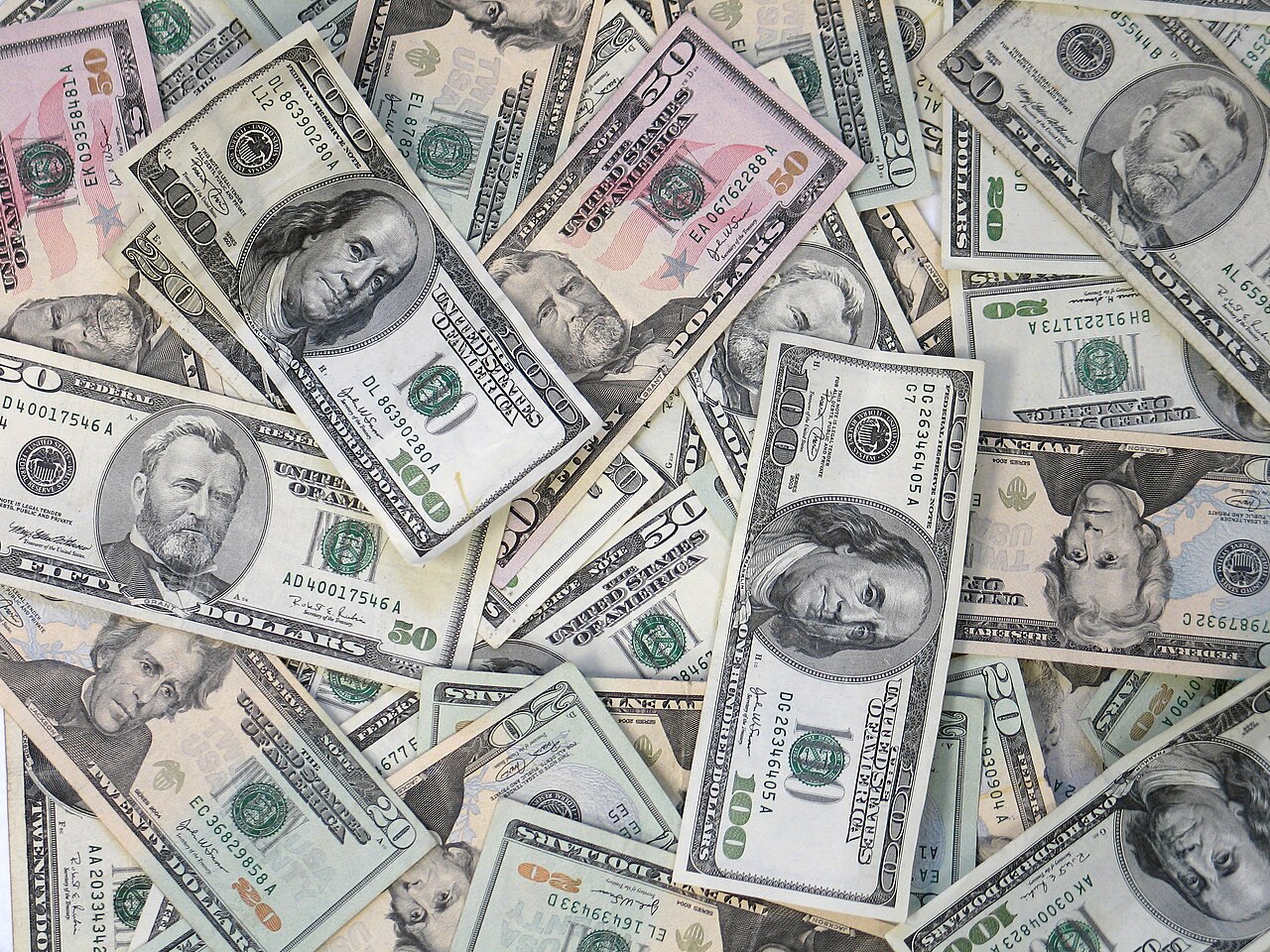
Paper money in America is called a bill (in British English, a note or banknote). Bills come in these common values: $1, $5, $10, $20, $50, and $100. They are all the same size and color, so you have to read the number and the face on each one.
A few pieces of slang are worth knowing:
- A buck means one dollar ("it costs five bucks").
- Cash means physical money, coins and bills together, as opposed to a card.
- Change has a second meaning here: it is also the money you get back when you pay with more than the item costs ("keep the change").
Words with two names
Money is full of the US-versus-UK differences this series keeps running into. The main ones:
- Bill (US) / note (UK) for paper money.
- Check (US) / cheque (UK), the paper payment you sign.
- ATM (US) / cashpoint (UK), the machine that gives you cash.
- Checking account (US) / current account (UK), your everyday bank account.
At the bank
When you open a bank account, you usually get two kinds:
- A checking account is for everyday spending, the one your debit card and paychecks are connected to.
- A savings account is for money you want to keep and grow, because the bank pays you interest on it.
The everyday actions have their own words:
- To deposit money is to put it into your account; to withdraw it is to take it out.
- Your balance is how much money you currently have in the account.
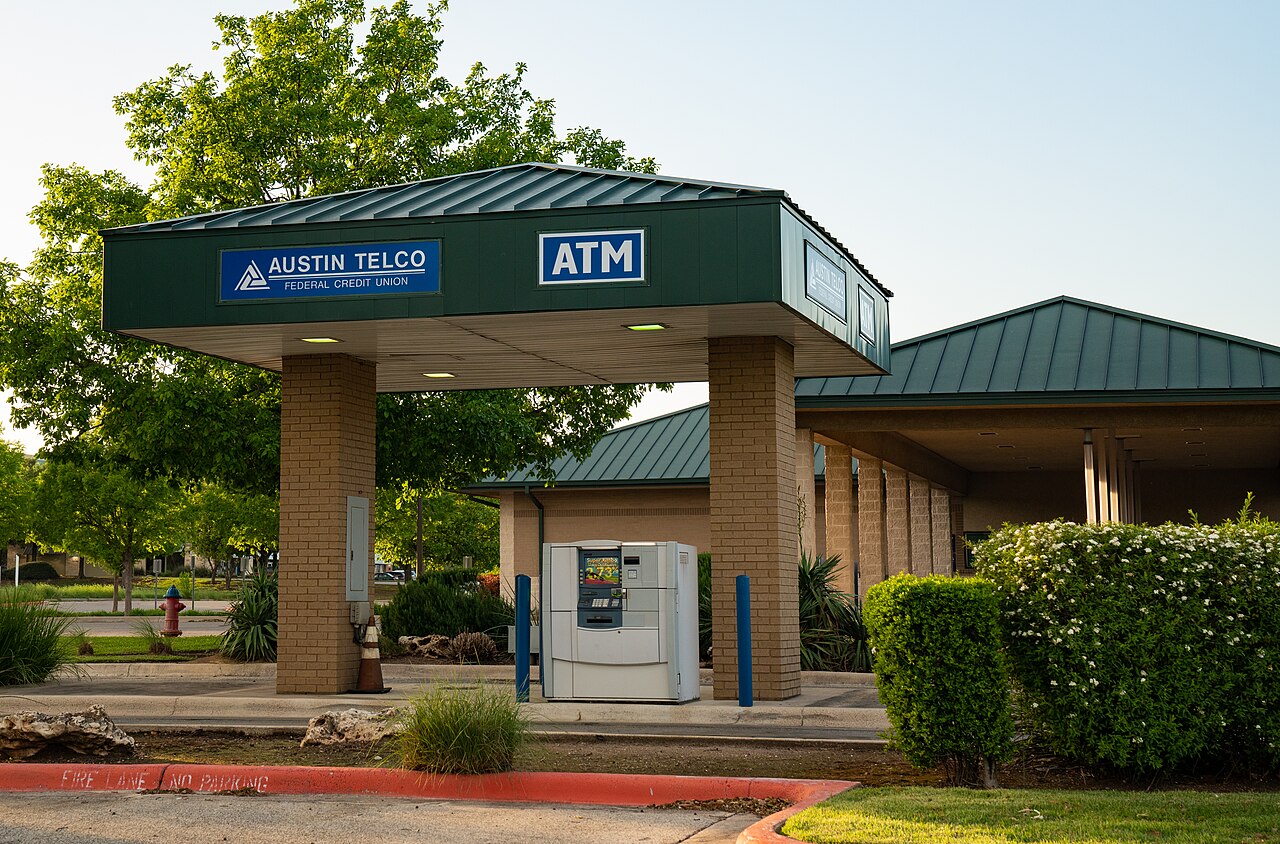
- The ATM (automated teller machine), shown above, lets you withdraw cash any time using your card and your PIN (personal identification number).
- Inside the bank, the teller is the person at the counter who helps you deposit, withdraw, and cash checks.
Paying, and the two meanings of "check"
When you spend money, a few more words come up:
- You can pay with cash, a debit card (which takes money straight from your checking account), or a credit card (which you pay back later).
- At a store you swipe, tap, or insert your card, and you get a receipt as proof of purchase.
- At a restaurant, the check is the piece of paper that tells you what you owe. (Yes, the same word "check" also means the paper payment you sign at the bank.) On top of the check, Americans usually add a tip.
Putting it all together
With these words you can handle money like a local: count out a penny, a nickel, a dime, and a quarter; pay with a twenty-dollar bill and keep the change; deposit your paycheck into your checking account; and withdraw a few bucks from the ATM. Keep the British twins in mind (note, cheque, cashpoint, current account), and you are ready for any cash register or bank counter. Since so much of this comes up at the end of a meal, our guide to eating at a restaurant is a natural next read.
Want these words to come out automatically? The collection below turns every term in this article into flashcards and quick quizzes, so the right money word is always ready at the register.