At School: The American Words for the Classroom
Few subjects come up as often as school. If you have kids, if you talk with American friends about growing up, or if you watch almost any US movie or show, the words for classrooms, grades, and teachers are everywhere. But the American school system is organized a little differently from the British one, and a few of its most common words either change name across the Atlantic or, trickier still, mean the opposite thing. This guide sorts it out, American English first.
As with the rest of this series, the goal is not just a word list but an explanation, so the names actually stick.
Words with two names
Start with the everyday school words that simply change between the US and the UK:
- Eraser (US) / rubber (UK). The thing that removes pencil marks. In British English the usual word is "rubber," which surprises a lot of Americans.
- Principal (US) / head teacher (UK). The person in charge of a school. A trick American kids learn: "the principal is your pal."
- Recess (US) / break or playtime (UK). The free time when younger students go outside to play.
- Cafeteria (US) / canteen (UK). The room where students eat lunch. Americans also call it the "lunchroom."
- Semester (US) / term (UK). One half of the school year. Many US schools split the year into two semesters, fall and spring.
- Field trip (US) / school trip (UK). A class outing to a museum, a zoo, or another site.
- Math (US) / maths (UK). The subject of numbers. Americans drop the "s," while the British keep it.
The "public school" trap
A couple of school words do not just change spelling, they flip meaning entirely between the two countries. These deserve extra care:
- Public school. In American English, a public school is a free school paid for by the government, the kind most children attend. In British English, a "public school" is an expensive private school, like Eton. So the very same two words describe opposite things. The American opposite of a public school is a private school.
- College. In American English, college usually means a university, the place you go after high school; Americans say "I'm going to college" to mean higher education in general. In British English, "college" more often names a stage between school and university, so the word does not map cleanly across the Atlantic.
The American school ladder
American children climb a clear sequence of schools:
- Elementary school (US) / primary school (UK) covers roughly ages 5 to 11.
- Middle school (sometimes called "junior high") covers the years in between, roughly ages 11 to 14.
- High school covers roughly ages 14 to 18 and ends with graduation.
- College or university comes after that.
Each year is called a grade: first grade, second grade, all the way up to twelfth grade. The whole span is written "K–12," where "K" is kindergarten, the year before first grade. Watch out, because grade has two meanings in American English: it is both the year level ("she's in fifth grade") and the score on your work ("she got a good grade on the test"). British English uses "mark" for the score.
At the end of each term, students bring home a report card listing their grades in every subject. In high school and college, those grades are averaged into a single number called a GPA, or grade point average.
In the classroom
Step inside, and the room has its own set of words:
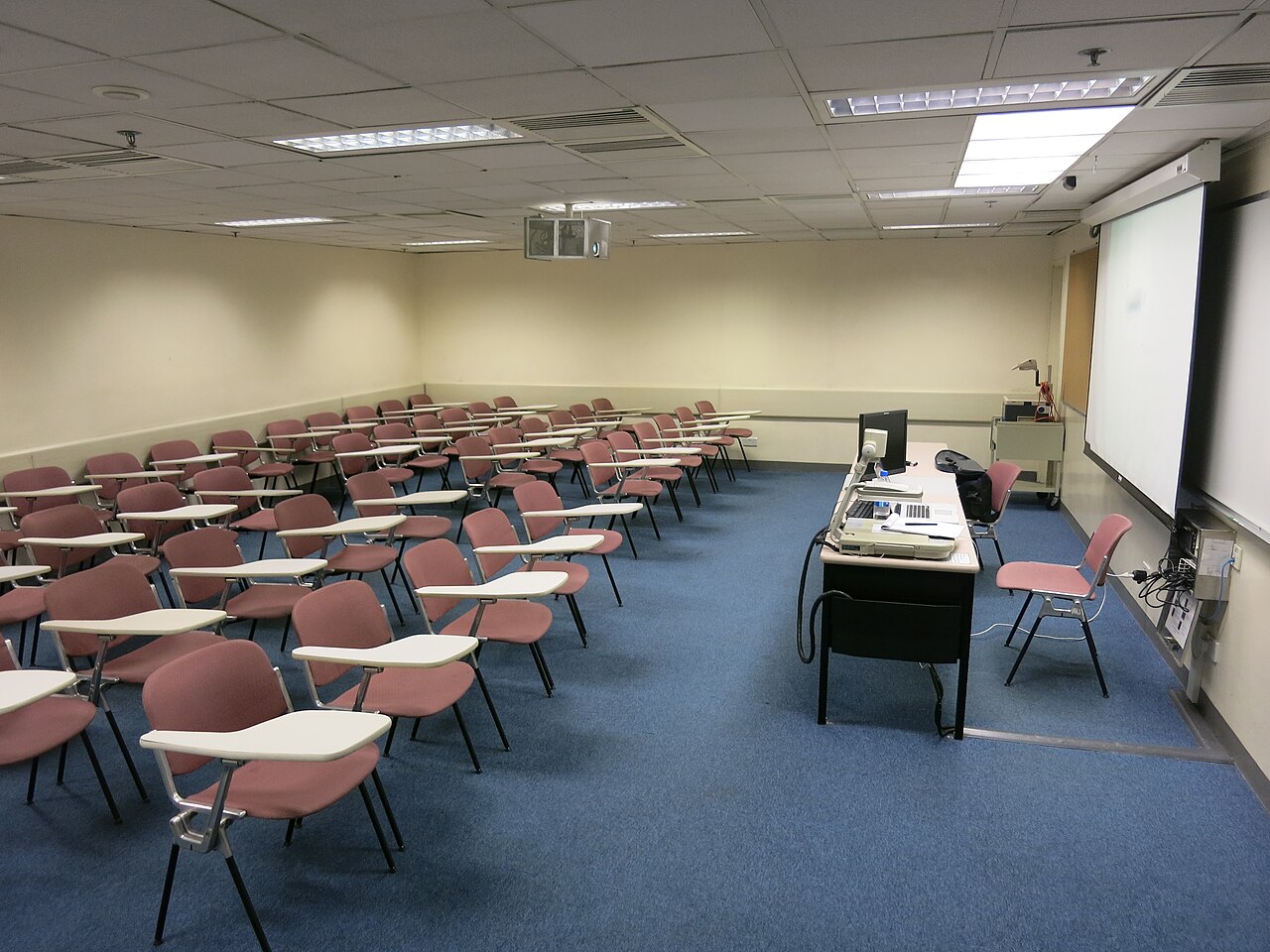
- The teacher leads the class, and the students (younger ones are also called "pupils") sit at their desks.
- The teacher writes on a chalkboard, the old green or black board, or a whiteboard, the modern white one. The older word "blackboard" is still common.
- Students carry a backpack full of supplies: a notebook to write in, a textbook to read from, pencils, a marker or two, and an eraser.
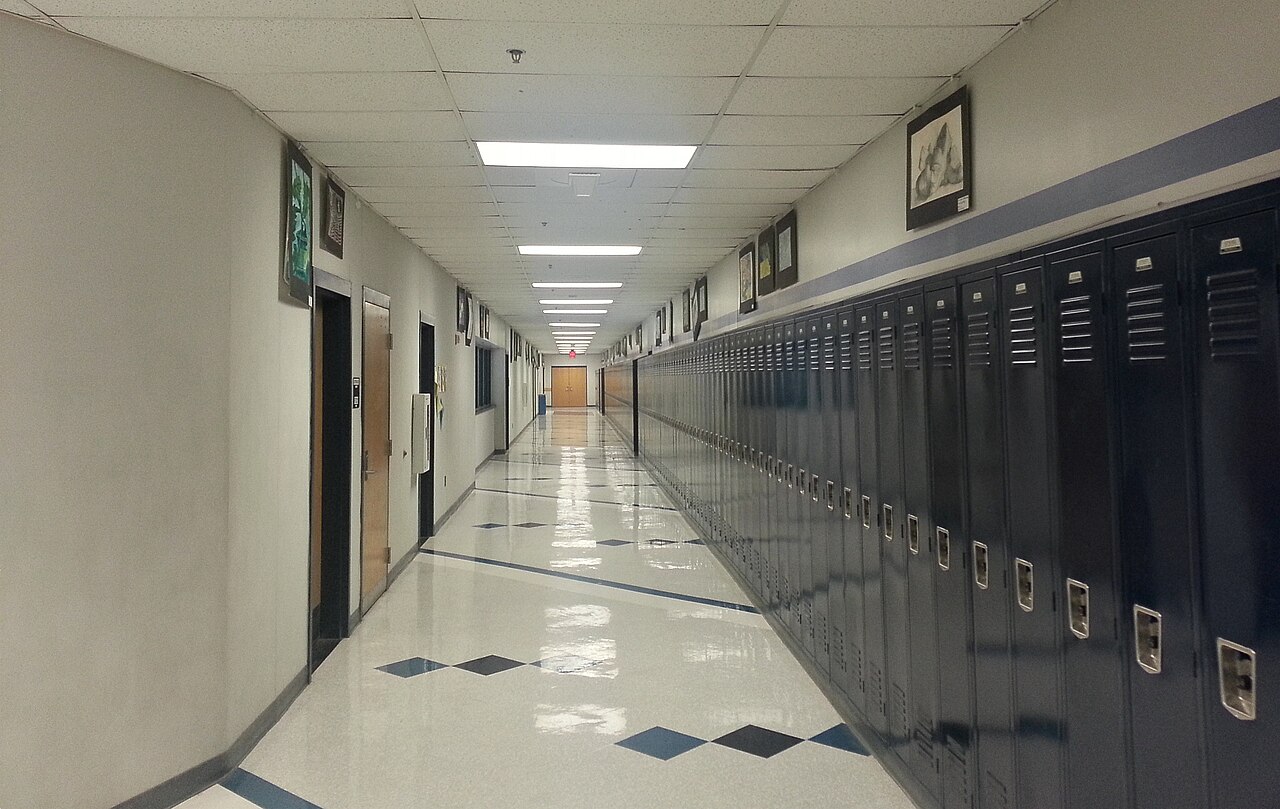
- Out in the hallway, each student often has a locker, a tall, narrow metal cabinet for books and coats, like the ones pictured above.
Tests, homework, and getting in trouble
Finally, the words for the work itself, and for what happens when things go wrong:
- Homework is the work you do at home after class.
- A quiz is a short, small test; a test or an exam is a bigger one. A surprise quiz is a "pop quiz."
- Do well and you earn a good grade: the top American grade is an "A," and the failing one is an "F."
- Break the rules and you might get detention, where you have to stay after school as a punishment.
- When the lesson is over, younger kids get recess to run around outside, and everyone can blow off steam in gym class.
Putting it all together
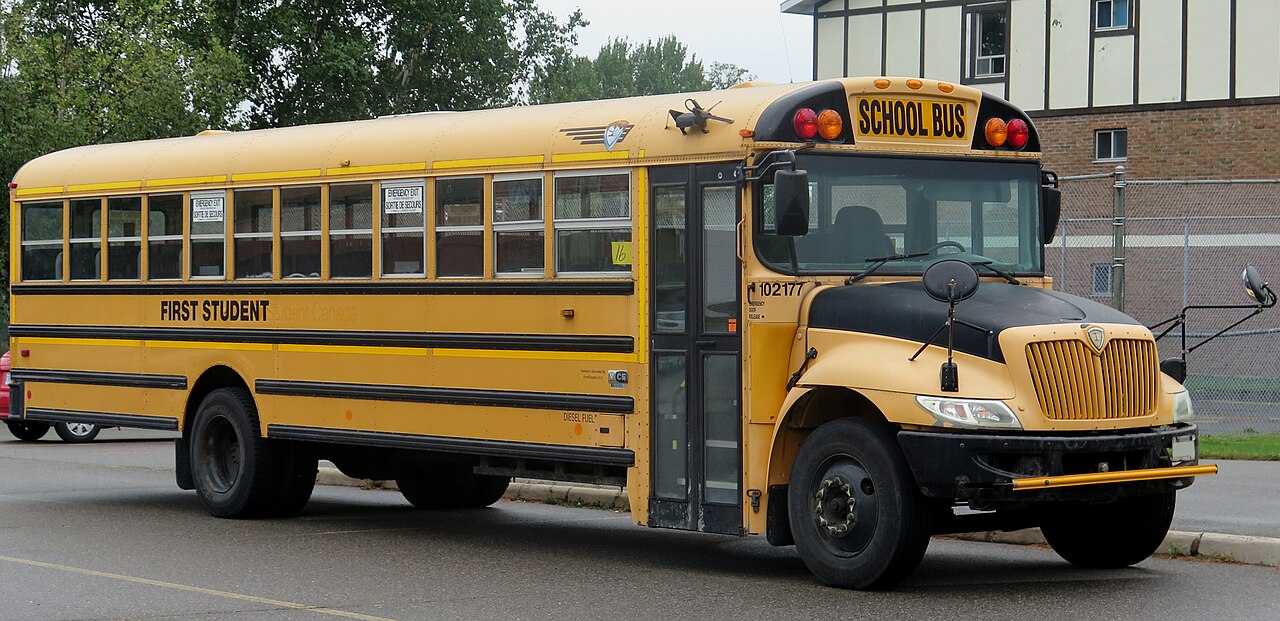
With these words, you can follow a whole American school day: ride the yellow bus, stop at your locker, sit at your desk for math, eat in the cafeteria, head outside for recess, and bring home a report card at the end of the semester. Keep the British twins (rubber, head teacher, canteen, maths) in mind for when you watch a UK show, and remember the big trap: an American "public school" is a free one. Getting ready for the first day? Our guide to what to wear covers the American words for clothes.
Want these words to come out automatically? The collection below turns every term in this article into flashcards and quick quizzes, so the American school words become second nature.